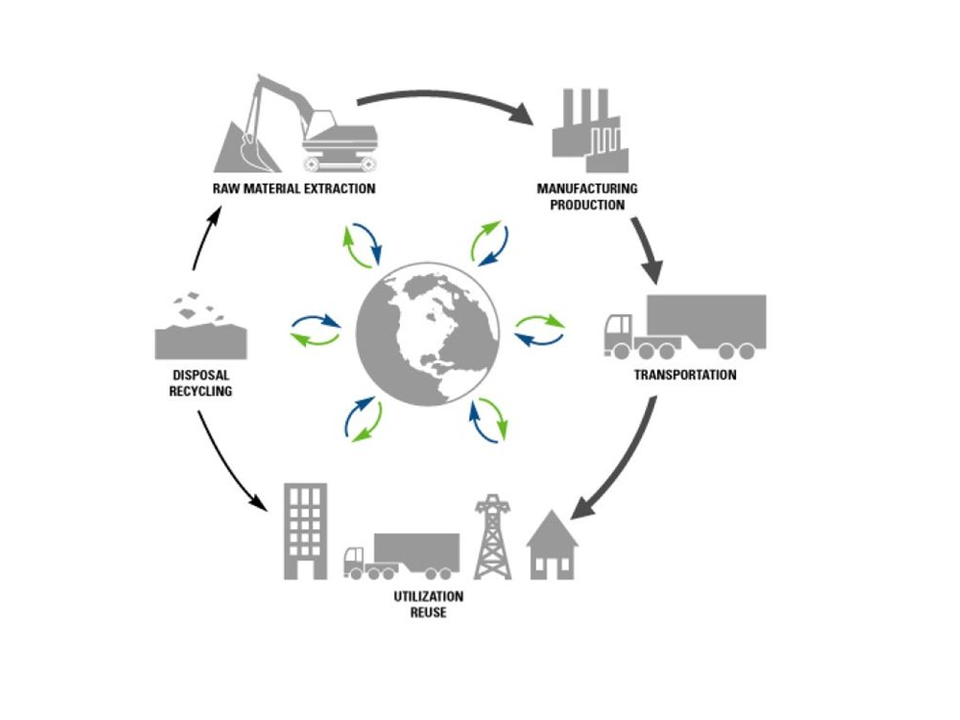
図3. 業界の視点からの製品ライフサイクル。(Source: https://commons.wikimedia.org/wiki/File:Product%E2%80%99s_lifecycle.jpg#filelinks Accessed February 6, 2012. NIST Programs of the Manufacturing Engineering Laboratory, Released by US Federal Government, Public Domain)
Product Systems Engineering Key Aspects
<center>The "Product Systems Engineering" knowledge area is graciously sponsored by PPI.<center>
「Product Systems Engineering」の知識領域は PPI の厚意によりスポンサードされている。
この図は原典のページに掲載されています。権利の都合により本サイトでは省略しています。原典で見る
The emphasis for traditional systems engineering (TSE) is in the provisioning of products and related services that meet stakeholder needs and requirements. For acquired products, an acquirer specifies the needs and requirements, selects a supplier for development and provisioning, and then receives the needed products and services. The acquirer, after acceptance, usually owns, operates, and maintains the product and the support systems supplied by the developer. Offered products are provided by suppliers based on opportunities to develop and offer products and services to potential users of the product based on business objectives usually measured in terms of value addition to the stakeholder.
伝統的システムズエンジニアリング(traditional systems engineering、TSE)の重点は、ステークホルダーのニーズと要求事項を満たす製品と関連サービスを提供することにある。取得される製品の場合、取得者(acquirer)がニーズと要求事項を指定し、開発と提供を担うサプライヤーを選定したうえで、必要な製品とサービスを受け取る。取得者は通常、受入後に、開発者が供給した製品と支援システムを所有し、運用し、保守する。提供される製品は、製品の潜在的な利用者に向けて製品とサービスを開発・提供する機会に基づき、事業目標に基づいてサプライヤーが提供するものである。この事業目標は通常、ステークホルダーにとっての付加価値の観点から測られる。
In the provisioning of product systems and related services, the enterprise owning and provisioning the product and services typically makes agreements with other suppliers to also provide elements, methods, and tools that are used during their entire life cycle. The supplying enterprises, in turn, may make further agreements with suppliers in regards to building a supply chain. The complexities of dealing with supply chains must be accounted for with respect to cost, risk, and schedule and thus can have an impact upon product or service maturity. (See articles under the Systems Engineering Organizational Strategy knowledge area (KA) in Part 5.)
製品システムと関連サービスを提供する際、製品とサービスを所有し提供するエンタープライズは通常、そのライフサイクル全体を通して使われる要素、方法、ツールも提供してもらうよう、他のサプライヤーと合意を結ぶ。供給側のエンタープライズはさらに、サプライチェーンの構築に関して、サプライヤーと追加の合意を結ぶことがある。サプライチェーンへの対処に伴う複雑さは、コスト、リスク、スケジュールの面で考慮しなければならず、したがって製品やサービスの成熟度に影響を及ぼし得る。(Part 5 の『Systems Engineering Organizational Strategy』の知識領域(KA)に属する記事を参照されたい。)
Specific needs for a product or service typically result in some form of an agreement between the acquirer and a supplier as specified in the agreement processes of ISO/IEC 15288 (2015). The acquirer specifies the need and requirements for the properties of the expected product or service and may or may not place specific requirements upon how the supplier plans to organize their life cycle treatment of the product or system.
製品やサービスに対する具体的なニーズが生じると、通常は ISO/IEC 15288(2015)の合意プロセスに規定されているように、取得者とサプライヤーの間で何らかの形の合意が結ばれる。取得者は、期待する製品やサービスの特性に関するニーズと要求事項を指定する。また、サプライヤーが製品やシステムのライフサイクルにおける扱いをどのように組織する計画かについて、具体的な要求事項を課す場合もあれば、課さない場合もある。
The degree of formality involved with the agreement varies and is strongly influenced by whether the customer is a government entity or a commercial entity. Government contracts usually incorporate strict specifications and other unique requirements that are rarely found in commercial contracts. Government acquisition agents often specify design characteristics in addition to functional and performance specifications. Design specifications place constraints on product systems engineering (PSE) by explicitly defining the details of a product's physical characteristics. The government acquirer may also specify how the product is to be designed and developed or how it is to be produced. Government specifications tend to be longer, more detailed, and more complex than functional specifications and much longer than specifications used in a commercial environment.
合意の形式性の度合いはさまざまであり、顧客が政府機関か商業機関かによって大きく左右される。政府の契約には通常、商業契約ではめったに見られない厳格な仕様やその他の固有の要求事項が盛り込まれる。政府の取得担当者は、機能仕様や性能仕様に加えて、設計特性も指定することが多い。設計仕様は、製品の物理的特性の詳細を明示的に定義するため、製品システムズエンジニアリング(PSE)に制約を課す。政府の取得者は、製品をどのように設計・開発すべきか、あるいはどのように生産すべきかを指定することもある。政府の仕様は、機能仕様よりも長く、詳細で、複雑になる傾向があり、商業環境で使われる仕様と比べるとはるかに長い。
When contracting with the government or similar enterprises, the PSE must identify disagreements related to the meaning of a particular provision in a contract, and work with contracts to get a written resolution of all ambiguities and issues in the specifications. Failure to do this can lead to legal disputes and government claims of product substitution which can prevent acceptance of the product system and result in financial penalties.
政府や同様のエンタープライズと契約する際、PSE は、契約中の特定の条項の意味をめぐる不一致を特定し、契約部門と連携して、仕様に含まれるあらゆる曖昧さと問題について書面による解決を得なければならない。これを怠ると、法的紛争や、政府から契約対象の製品が別の製品で代替されたと申し立てられることにつながることがある。そうした申し立ては、製品システムの受入を妨げ、金銭的な罰則をもたらし得る。
Developing product systems for government customers requires PSE to do a thorough review and perform internal coordination within the enterprise to prevent it from submitting proposals that are non-compliant because the requirements are not fully understood.
政府の顧客向けに製品システムを開発する場合、PSE は徹底的なレビューを行い、エンタープライズ内部で調整を図って、要求事項が完全には理解されていないために不適合な提案を提出してしまうことを防ぐ必要がある。
Given an opportunity or perceived opportunity, an enterprise may decide to develop and offer products or services to a broader potential marketplace. The properties of the product or service are often determined through surveying and/or forecasting the potential market penetration. The supplier determines the structure and operation of an appropriate life cycle model for achieving the desired results (Pugh 1990).
機会、あるいは機会と認識されたものがあれば、エンタープライズは、より広い潜在市場に向けて製品やサービスを開発し提供することを決めることがある。製品やサービスの特性は、潜在的な市場浸透度を調査し、かつ/または予測することによって決まることが多い。サプライヤーは、望ましい結果を達成するのに適したライフサイクルモデルの構造と運用を決定する(Pugh 1990)。
The supply of products and services to the owner of a product or service that is acquired or offered at various points during the life cycle is vital to success. It is this wider system-of-interest (WSOI) that is the outsourcing holism that must be treated properly in order to provide successful products or services. A portrayal of supply chain structure is provided in Figure 1 below.
ライフサイクルのさまざまな時点において、取得される製品・サービスや提供される製品・サービスの所有者に製品とサービスを供給することは、成功に不可欠である。適切に扱わなければならないアウトソーシングの全体性とは、まさにこのより広い対象システム(WSOI)である。サプライチェーンの構造を下の図1に示す。
Figure 1. Supply Chain Structure (Lawson 2010). Reprinted with permission of Harold "Bud" Lawson. All other rights are reserved by the copyright owner.
図1. サプライチェーンの構造(Lawson 2010)。Reprinted with permission of Harold \"Bud\" Lawson. All other rights are reserved by the copyright owner.
この図は原典のページに掲載されています。権利の都合により本サイトでは省略しています。原典で見る
In Figure 1, it is important to note that in an agreement with a supplier, the outsourcing can involve delivering complete system description solutions or portions thereof. For example, a supplier could, given a set of stakeholder requirements developed by the acquirer, develop and supply a system that conforms to the architectural solution. The supplier in turn can be an acquirer of portions of their delivered results by outsourcing to other suppliers.
図1に関して注意すべき重要な点は、サプライヤーとの合意において、アウトソーシングには完全なシステム記述のソリューションまたはその一部の提供が含まれ得ることである。例えば、サプライヤーは、取得者が策定したステークホルダー要求事項の集合を与えられれば、アーキテクチャのソリューションに適合するシステムを開発し供給できる。そのサプライヤーもまた、他のサプライヤーにアウトソーシングすることで、自らが提供する成果の一部について取得者となり得る。
In regards to production, the outsourcing agreement with a supplier can vary from total production responsibility to merely supplying instances of system elements to be integrated by the acquirer. Once again, these suppliers can be acquirers of portions of their delivery from outsourcing to other suppliers.
生産に関しては、サプライヤーとのアウトソーシングの合意は、生産責任をすべて負うものから、取得者が統合するシステム要素のインスタンスを供給するだけのものまで、さまざまである。ここでも、これらのサプライヤーは、他のサプライヤーへのアウトソーシングにより、自らの提供物の一部について取得者となり得る。
In regards to utilization, for non-trivial systems, outsourcing agreements can be made with a supplier to provide for operational services, for example, operating a health care information system. Further agreements with suppliers can involve various forms of logistics aimed at sustaining a system product or service or for supplying assistance in the form of help desks. Once again, suppliers that agree to provide services related to utilization can be acquirers of the services of other suppliers.
利用に関しては、単純な構成に収まらないシステムの場合、運用サービスの提供についてサプライヤーとアウトソーシングの合意を結ぶことができる。例えば、ヘルスケア情報システムの運用である。サプライヤーとのさらなる合意には、システム製品やサービスの維持を目的としたさまざまな形のロジスティクスや、ヘルプデスクという形での支援の供給が含まれることがある。ここでも、利用に関連するサービスの提供に合意したサプライヤーは、他のサプライヤーのサービスの取得者となり得る。
Important to all supply chains is the concept that supplying parties contribute some form of added value to the life cycle of a system-of-interest. The proper management of a supply chain system asset is a vital part of the operations of an enterprise. In fact, the supply chain itself is an enterprise system-of-interest that is composed of acquirers and suppliers as system elements. There is definitely a structure tied together by agreement relationships. Further, the operation of the supply chain results in an emergent behavior. The supply chain system becomes a vital infrastructure asset in the system portfolios of enterprises and forms the basis for extended enterprises.
あらゆるサプライチェーンにとって重要なのは、供給する当事者が、対象システムのライフサイクルに何らかの形で付加価値をもたらすという概念である。サプライチェーンというシステム資産を適切に管理することは、エンタープライズの運用に不可欠な部分である。実際、サプライチェーン自体が、取得者とサプライヤーをシステム要素として構成される、エンタープライズの対象システムである。そこには、合意関係によって結びつけられた構造が明確に存在する。さらに、サプライチェーンの運用は創発的な振る舞いを生み出す。サプライチェーンシステムは、エンタープライズのシステムポートフォリオにおいて不可欠なインフラストラクチャ資産となり、拡張エンタープライズの基盤を形成する。
Similar to a supply chain, the distribution channels for a product system can be a complex web of relationships between the product supplier and various distributors, for example, package delivery companies, warehouses, service depots, wholesale outlets, retail sales establishments, operator training and certification organizations, and so on. The nature of the distribution channels could have a significant impact on the architecture or design of a product system.
サプライチェーンと同様に、製品システムの流通チャネルも、製品のサプライヤーとさまざまな流通業者との間の複雑な関係の網となり得る。例えば、宅配便会社、倉庫、サービスデポ、卸売店、小売店、運用者の訓練・認証組織などである。流通チャネルの性質は、製品システムのアーキテクチャや設計に大きな影響を与え得る。
PSE may need to include special features in the product design to accommodate for the needs of distribution channel elements, for example, heavy load tie down or lifting brackets, protective shipping packages, retail marketing displays, product brochures, installation manuals, operator certification packages, training materials, and so on. Sometimes it may be necessary to create special versions (or instances) of the product for the training of operators and users for certifying safe or secure operations, for environmental testing and qualification, for product demonstration and user testing, for patent application, for load testing and scalability demonstrations, and for interface fit checking and mass balance certification, to name some examples.
PSE は、流通チャネルの要素のニーズに対応するため、製品設計に特別な特徴を盛り込む必要が生じることがある。例えば、重量物の固定用や吊り上げ用のブラケット、出荷用の保護包装、小売向けのマーケティング展示、製品パンフレット、設置マニュアル、運用者認証パッケージ、訓練資料などである。運用者と利用者の訓練(安全またはセキュアな運用の認証のため)、環境テストと適格性確認、製品の実演と利用者テスト、特許出願、荷重テストとスケーラビリティの実証、インタフェース適合チェックと質量バランス認証などのために、製品の特別なバージョン(あるいはインスタンス)を作る必要が生じる場合もある。ここに挙げたのはその一部の例である。
The life cycle of each product follows the typical incremental development phases shown below (Wasson 2006, 59-65). A particular product to be engineered could be preceded by a previous “model” of that product as shown in the product model life cycle below, and could be superseded later by a newer model of that product. It is worth noting that there is no standard set of life cycle phases. The example below is one of many ways that the phases can be structured.
各製品のライフサイクルは、下に示す典型的なインクリメンタル開発フェーズに従う(Wasson 2006, 59-65)。エンジニアリングの対象となる特定の製品には、下の製品モデルライフサイクルに示すように、その製品の以前の『モデル』が先行して存在することがあり、また後には、その製品のより新しいモデルに取って代わられることもある。ライフサイクルフェーズに標準的な集合が存在しないことは注目に値する。下の例は、フェーズを構成する多くの方法のうちの一つである。
Figure 2. Product Lifecycle as Related to the Product Model Lifecycle (Wasson 2006). Reprinted with permission of John Wiley & Sons, Inc. All other rights are reserved by the copyright owner.
図2. 製品モデルライフサイクルとの関係における製品ライフサイクル(Wasson 2006)。Reprinted with permission of John Wiley & Sons, Inc. All other rights are reserved by the copyright owner.
この図は原典のページに掲載されています。権利の都合により本サイトでは省略しています。原典で見る
From an industry perspective, managing a product’s life cycle involves more than just the engineering aspects:
業界の視点から見ると、製品のライフサイクルの管理には、エンジニアリングの側面にとどまらないものが関わる。
<nowiki/><blockquote>Product lifecycle management (PLM) is the process of managing the entire lifecycle of a product from its conception through design and manufacture to service and disposal. PLM integrates people, data, processes and business systems, and provides a product information backbone for companies and their extended enterprise. (CIMdata 2012)</blockquote>
『製品ライフサイクルマネジメント(PLM)とは、製品の構想から設計・製造を経てサービスと廃棄に至るまで、製品のライフサイクル全体を管理するプロセスである。PLM は、人、データ、プロセス、ビジネスシステムを統合し、会社とその拡張エンタープライズに製品情報の基盤を提供する。』(CIMdata 2012)
There are many PLM tools and services available for facilitating the development and management of complicated product life cycles and especially for product line management (insert link to product line mgmt section here).
複雑な製品ライフサイクルの開発と管理を促進するため、特に製品ライン管理を目的として、多くの PLM ツールとサービスが利用可能である(ここに製品ライン管理の節へのリンクを挿入)。
図中の英語
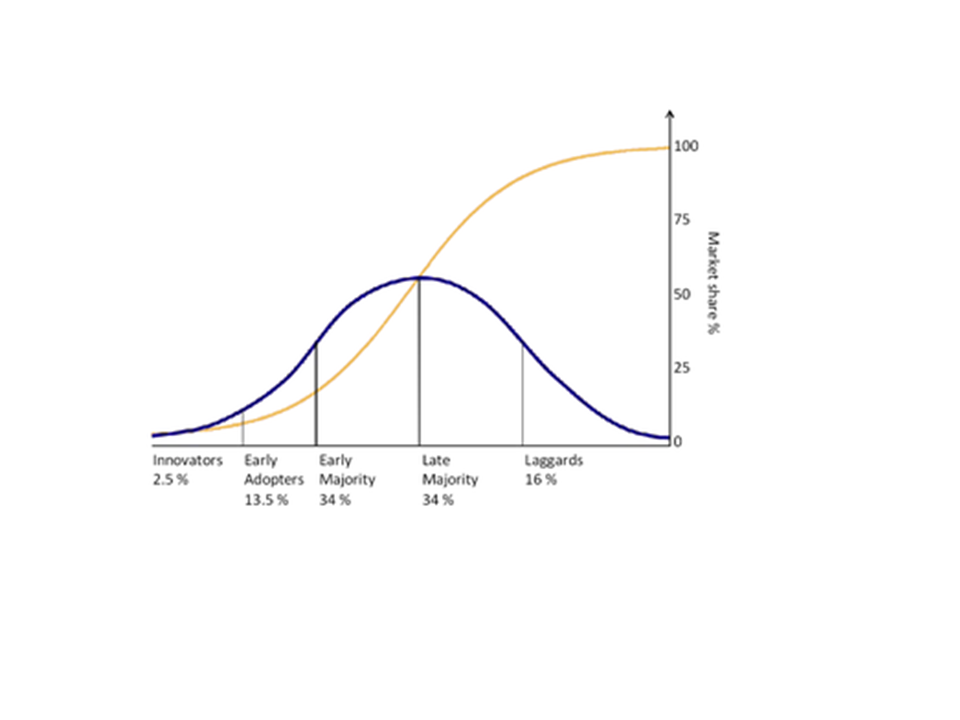
The product and product model life cycles are driven by the product adoption rate, illustrated below, that is commonly experienced by most engineered products (Rogers 2003). As products reach market saturation (i.e., on the down slope of the curve below) then there would typically be a new, upgraded version of the product ready for delivery to the marketplace. PSE serves a critical role in determining the best timing for delivery of this new version and the set of features and functions that would be of the greatest value at that time.
製品と製品モデルのライフサイクルは、下に示す製品採用率によって駆動される。これは、エンジニアリングされた製品の大半が一般に経験するものである(Rogers 2003)。製品が市場の飽和に達すると(すなわち、下の曲線の下り坂)、通常、市場への提供準備が整った、アップグレードされた新しいバージョンの製品が存在する。PSE は、この新バージョンを提供する最適なタイミングと、その時点で最も価値の高い特徴と機能の集合を決定するうえで、重要な役割を果たす。
図中の英語
Product systems as discussed throughout this KA mandate the participation of different disciplines for their success during their entire lifecycle from concept to product disposal or retirement. Rapid technology innovations and market pressures in the mid '90s demanded development process (mostly input-output serial) to shorten their development time and development cost, and to improve product quality to remain competitive. For commercial enterprises, the typical development times of 18-24 months to deploy new products into markets of the '90s have in many cases been reduced to 6-12 months and even 3-6 months for the highly competitive leading edge information technology products.
この KA 全体で論じる製品システムは、その成功のために、コンセプトから製品の廃棄や廃止に至るライフサイクル全体を通して、異なる分野の参加を必須とする。90年代半ばの急速な技術革新と市場の圧力により、開発プロセス(大部分が入出力の直列型)には、開発時間と開発コストを短縮するとともに、競争力を維持するために製品品質を改善することが求められた。商業エンタープライズでは、90年代に新製品を市場に投入するための典型的な開発期間であった18-24か月が、多くの場合6-12か月に短縮され、競争の激しい最先端の情報技術製品では3-6か月にまで短縮された。
An initial response to these pressures was concurrent engineering. Concurrent engineering is “... a systematic approach to the integrated, concurrent design of products and their related processes, including manufacturing and support to cause developers, from the outset to consider all elements of the product lifecycle from conception through disposal, including quality, cost, schedule and end user requirements." This definition has evolved into the integrated product development (IPD) as more descriptive of this concurrency to describe the continuous integration of the entire product team, including engineering, manufacturing, test, and support through the life cycle. Later, as the importance of the process was recognized, the terminology was modified to integrated product and process development or IPPD (INCOSE 2012).
これらの圧力に対する当初の対応は、コンカレントエンジニアリングであった。コンカレントエンジニアリングとは、『開発者が当初から、構想から廃棄までの製品ライフサイクルのすべての要素(品質、コスト、スケジュール、最終利用者の要求を含む)を考慮するようにするための、製造と支援を含めた、製品とその関連プロセスの統合的かつ同時並行的な設計への体系的なアプローチ』である。この定義はその後、製品チーム全体(エンジニアリング、製造、テスト、支援を含む)がライフサイクルを通して継続的に統合されることを記述するものとして、この同時並行性をよりよく表す統合製品開発(integrated product development、IPD)へと発展した。後に、プロセスの重要性が認識されるにつれ、用語は統合製品・プロセス開発、すなわち IPPD に改められた(INCOSE 2012)。
The INCOSE Systems Engineering Handbook v. 3.2.2 provides a good description of the IPT and IPDT process; the different types of IPDT; the steps in organizing and running an IPDT; good examples of IPDT, particularly for acquired systems; and a good discussion on IPDT pitfalls to avoid. (INCOSE 2012)
INCOSE の『Systems Engineering Handbook』v. 3.2.2 は、IPT と IPDT のプロセス、IPDT のさまざまなタイプ、IPDT を組織し運営する手順、特に取得されるシステムに関する IPDT の良い例、そして避けるべき IPDT の落とし穴についての良い議論を提供している。(INCOSE 2012)
IPD/IPPD helps plan, capture, execute, and evaluate programs to help design, test, build, deliver, and support products that satisfy diverse stakeholder requirements. IPD/IPPD outlines the necessary infrastructure needed to deploy, maintain, evaluate and continuously improve processes and tools by aligning people (IPTs) and processes to realize product goals (customer satisfaction). The implementation of Integrated Product Development Processes (IPDP) requires an integrated approach for program planning and generally includes the following: Business Strategy, Program Management and Control, Project Planning, Product Requirements and Architecture Development, Product Design and Development, Production and Deployment, Product Verification and Validation, and Operations and Maintenance Support.
IPD/IPPD は、多様なステークホルダーの要求事項を満たす製品を設計し、テストし、構築し、提供し、支援するために、プログラムの計画、内容の取りまとめ、実行、評価を支援する。また、人々(IPT)とプロセスを整合させて製品の目標(顧客満足)を実現することにより、プロセスとツールを配備し、維持し、評価し、継続的に改善するために必要なインフラストラクチャの概要を示す。統合製品開発プロセス(Integrated Product Development Processes、IPDP)の実装には、プログラム計画に対する統合的なアプローチが必要であり、一般に次のものが含まれる。事業戦略、プログラムマネジメントと管理、プロジェクト計画、製品要求事項とアーキテクチャの策定、製品の設計と開発、生産と配備、製品の検証と妥当性確認、運用と保守の支援。
At each development stage, there is a decision gate that helps decide if the IPDP is feasible to enter the next stage of product development. IPD utilizes multi-functional IPTs to optimize the individual product and processes to meet overall cost and performance objectives. IPTs are a cross-functional group of people typically including representatives of all the relevant stakeholders in the project, who are brought together for delivering an integrated product to an external or internal customer using relevant IPDP. The main function of the IPTs is to ensure the business, technical and economical integrity and overall success of the product that is delivered to its eventual customer. IPTs carry out tailored IPDPs and follow relevant SE processes to deliver products that satisfy customer needs, overcomes external constraints, and adheres to the overall program strategy.
各開発段階には、IPDP が製品開発の次の段階に進むことが可能かどうかを判断する助けとなる意思決定ゲートがある。IPD は、複数の職能から成る IPT を活用して、全体のコスト目標と性能目標を満たすよう、個々の製品とプロセスを最適化する。IPT は職能横断の人々のグループであり、一般にプロジェクトのすべての関連ステークホルダーの代表を含み、関連する IPDP を用いて外部または内部の顧客に統合された製品を提供するために集められる。IPT の主な機能は、最終的な顧客に提供される製品について、事業上、技術上、経済上の完全性と全体的な成功を確実にすることである。IPT は、テーラリングされた IPDP を実施し、関連する SE プロセスに従って、顧客のニーズを満たし、外部の制約を克服し、全体のプログラム戦略に忠実な製品を提供する。
In the case of commercial enterprises, product development is tightly coupled with business strategies (short and long term), stakeholder value added measured in terms of return on investments (ROI), market presence/coverage, and other strategies as defined by the business objectives. Thus, product integration teams include strategic planners, business managers, financial managers, market managers, quality assurance managers, customer representatives, and end-users, as well as other disciplines required for acquired products. Phillips (2001), Annachino (2003), and Morse (2007) provide good discussions on this topic.
商業エンタープライズの場合、製品開発は、事業戦略(短期と長期)、投資収益率(return on investments、ROI)の観点から測られるステークホルダーにとっての付加価値、市場での存在/カバレッジ、そして事業目標によって定義されるその他の戦略と密接に結びついている。したがって、製品統合チームには、戦略プランナー、事業マネージャー、財務マネージャー、市場マネージャー、品質保証マネージャー、顧客の代表、最終利用者のほか、取得される製品に必要なその他の分野が含まれる。Phillips(2001)、Annachino(2003)、Morse(2007)がこの話題についての良い議論を提供している。
The architectural properties of a product system are influenced by the concerns of the various stakeholders as indicated in the ISO/IEC 42010 standard (ISO/IEC 2011). The stakeholders have various views that they express based on their specific perspective. These views are vital in establishing requirements and are inputs to those responsible for defining the functions, structures, and relationships needed to achieve the desired product or service.
製品システムのアーキテクチャ上の特性は、ISO/IEC 42010 標準(ISO/IEC 2011)に示されているように、さまざまなステークホルダーの関心事の影響を受ける。ステークホルダーは、それぞれの具体的な視点に基づいて表明するさまざまなビューを持っている。これらのビューは、要求事項を確立するうえで不可欠であり、望ましい製品やサービスを実現するために必要な機能、構造、関係を定義する責任を負う人々への入力となる。
A number of stakeholders have been identified in the discussions of product systems. It would be possible to identify a set of important stakeholders based on the life cycle thinking provided by the ISO/IEC 15288 standard (2015), for example, one such set could consist of owners, conceivers, developers, producers, users, and maintainers as discussed by Lawson (2010). As mentioned earlier, these stakeholders should cooperate at all stages of the life cycle in specifying requirements, verifying that the requirements are met, and validating that the products produced provide needed capabilities.
製品システムの議論の中では、多くのステークホルダーが特定されてきた。ISO/IEC 15288 標準(2015)が示すライフサイクルの考え方に基づいて、重要なステークホルダーの集合を特定することが可能である。例えば、そうした集合の一つは、Lawson(2010)が論じているように、所有者、構想者、開発者、生産者、利用者、保守者から構成され得る。先に述べたように、これらのステークホルダーは、ライフサイクルのすべての段階で協力して、要求事項を指定し、要求事項が満たされていることを検証し、生産された製品が必要な能力を提供することを妥当性確認すべきである。
In addition to the two standards that have been identified, there are a variety of standards related to specialty aspects of products, such as safety and security, as well as standards that are applicable for project management and life cycle considerations, such as requirements and quality management.
ここで挙げた2つの標準に加えて、安全やセキュリティといった製品の専門的な側面に関連するさまざまな標準や、要求や品質マネジメントのように、プロジェクトマネジメントやライフサイクル上の考慮事項に適用可能な標準もある。
Modeling, simulation, prototyping, and experimentation are techniques that have the purpose of improving stakeholder knowledge and shared understanding about aspects of the system to de-risk system development and operation before heavy commitment of time and funds. Examples of this are found below:
*Understanding future needs: “Warfighting experiments are the heart of the Army's warfighting requirements determination process. Progressive and iterative mixes of high fidelity constructive, virtual, and live simulations using real soldiers and units in relevant, tactically competitive scenarios provide Army leaders with future operational capability insights" (US Army 2012), *Simulation is used to predict and optimize aspects of system performance for which there are good mathematical or logical models before committing the final physical design, and also to verify and validate the system design in scenarios where physical testing is too difficult, dangerous, or expensive, for example, checking the performance envelope of military systems in a wide range of engagement scenarios where test firing thousands of rounds to get statistically valid data is clearly unaffordable, ensuring that the safety features in a nuclear power station will operate correctly in a wide range of stressing scenarios, etc., *Prototyping (physical and virtual) is used in a wide variety of ways to check out aspects of system performance, usability, utility, and to validate models and simulations as part of the iterative process of converging on a final design, *In a manufacturing context, the first units produced are often “prototypes” intended to make sure the production process is working properly before committing to high rate production, and are often not shipped to end users, but used for intensive testing to qualify the design, and *Simulation is also used extensively for training and marketing purposes. For training, an accurate model of the human machine interface and representation of the operational context allows operators to do most of their training without putting operational hours on the real system enabling them to learn emergency procedures for combat and accident scenarios in a safe and repeatable environment; for example, airline and military pilots now train mainly on simulators. System simulators of various levels of fidelity are used to familiarize customers and end users with the potential characteristics and benefits of the system, available options and trade-offs, and integration issues early in the development and acquisition process.
All of these methods use a variety of physical and mathematical representations of the system and its environment so modeling is an enabler for simulation, prototyping, and experimentation.
モデリング、シミュレーション、プロトタイピング、実験は、時間と資金の大きな確約の前にシステムの開発と運用のリスクを低減するため、システムの諸側面に関するステークホルダーの知識と共通理解を高めることを目的とした技法である。その例を以下に示す。
これらの方法はいずれも、システムとその環境についてのさまざまな物理的・数学的表現を使うため、モデリングはシミュレーション、プロトタイピング、実験を実現する要素である。
An important trend in commercial products is the increasing importance of software in an increasingly wide range of products. Everything from phones, cameras, cars, test gear, and medical equipment now has essential functionality implemented in software. Software has had an increasing role in providing the desired functionality in many products. The embedding of software in many types of products accounts for increasing portions of product functionality. In tangible products such as cars, software helps improve functionality and usability (cruise control, climate control, etc.). In intangible products such as insurance, software helps in improving operational efficiency, data accessibility, etc.
商業製品における重要な動向は、ますます広範な製品においてソフトウェアの重要性が増していることである。電話、カメラ、自動車、テスト装置、医療機器に至るまで、あらゆるものが今や、ソフトウェアで実装された本質的な機能性を備えている。ソフトウェアは、多くの製品において望ましい機能性を提供するうえで、ますます大きな役割を担うようになってきた。多くの種類の製品へのソフトウェアの組み込みは、製品の機能性のますます大きな部分を占めている。自動車のような有形の製品では、ソフトウェアは機能性とユーザビリティの向上に役立つ(クルーズコントロール、クライメートコントロールなど)。保険のような無形の製品では、ソフトウェアは運用効率やデータのアクセシビリティなどの向上に役立つ。
The movement toward the internet of “things” where sensing and activating functions are incorporated is now starting to permeate. The use of various software products in proving service is also described in the Service Systems Engineering article.
感知機能と作動機能が組み込まれた『モノ』のインターネットへの動きが、今や浸透し始めている。サービスの提供におけるさまざまなソフトウェア製品の使用については、『Service Systems Engineering』の記事でも説明されている。
Recent advancements in IT and software have assisted in their increased use in PSE. Although software development is already a very complex field, the role of software in the development and functionality of products is growing larger each day.
IT とソフトウェアの最近の進歩は、PSE におけるそれらの利用拡大を後押ししてきた。ソフトウェア開発はすでに非常に複雑な分野であるが、製品の開発と機能性においてソフトウェアが果たす役割は日々大きくなっている。
There is a need to broaden the horizons of software engineers to think of problem solving not only in software terms, but also using the systems thinking approach. For this purpose, software engineers need to be able to think critically about the problem and also the possible solutions to the problem or opportunity and its implication for business objectives.
ソフトウェアエンジニアの視野を広げ、問題解決をソフトウェアの観点からだけでなく、システム思考のアプローチも用いて考えられるようにする必要がある。そのためには、ソフトウェアエンジニアは、問題について批判的に考えるとともに、問題や機会に対する可能なソリューションと、それが事業目標に及ぼす含意についても批判的に考えられなければならない。
Integration is "the set of activities that bring together smaller units of a system into larger units" (Eisner 2008). Products may consist of several systems, subsystems, assemblies, parts, etc., which have to work together as a whole to deliver the offered product’s functionalities at specified performance levels in the intended operations environment. Product integration entails not only the working together of hardware and software components, but also the organization, processes, people, facilities, and the resources for the manufacturing, distribution, maintenance, customer support, sales channels, etc. Grady (2010) groups the above information into three fundamental integration components: functional organization, product integration, and process integration.
統合とは、『システムのより小さなユニットをより大きなユニットへとまとめる一連の活動』である(Eisner 2008)。製品は、複数のシステム、サブシステム、アセンブリ、部品などから構成されることがあり、それらは全体として連携し、意図された運用環境において、指定された性能水準で、提供される製品の機能性を発揮しなければならない。製品の統合には、ハードウェアとソフトウェアの構成要素が連携することだけでなく、製造、流通、保守、顧客サポート、販売チャネルなどのための組織、プロセス、人々、施設、資源も含まれる。Grady(2010)は、上記の情報を3つの基本的な統合の構成要素、すなわち機能的組織、製品の統合、プロセスの統合に分類している。
PSE plays an important role to ensure well-defined interfaces, interactions, relationships, information exchange, and processes requirements between product components. These requirements are baseline, documented, traced, verified, and validated for the end-to-end Product integration and to maintain and ensure product offering integrity during its life cycle. The systems engineering hierarchical decomposition level allows requirement definition and allocations at different levels of abstraction to define the building blocks of the product architecture; these building blocks are assigned to integrated product development teams (IPDTs) for detailed design and development. The IPDTs or the systems engineering integration team (SEIT) must interact with all involved players to generate appropriate architectural block specifications at the lower tier of development for a product’s architectural configuration and configuration tracking. As the building blocks are put together, interface requirements, information exchange, and interaction and relationships among entities are verified against the baseline. Once a configuration item has been built and tested against the baseline, test and verification at higher levels are conducted to obtain the final product configuration; the final product configuration can only be changed by a formal approval from a configuration control board (CCB). Note: the acronym CCB is often used to mean the change control board that, in addition to configuration control, makes decisions of any aspect of a project or an enterprise.
PSE は、製品の構成要素間のインタフェース、相互作用、関係、情報交換、プロセスに関する要求事項が明確に定義されるようにするうえで、重要な役割を果たす。これらの要求事項は、エンドツーエンドの製品統合のため、またライフサイクルを通じて製品提供の完全性を維持し確実にするために、ベースライン化され、文書化され、トレースされ、検証され、妥当性確認される。システムズエンジニアリングの階層的分解の水準は、製品アーキテクチャのビルディングブロックを定義するために、異なる抽象レベルで要求事項を定義し割り当てることを可能にする。これらのビルディングブロックは、詳細な設計と開発のために統合製品開発チーム(IPDT)に割り当てられる。IPDT、あるいはシステムズエンジニアリング統合チーム(system engineering integration team、SEIT)は、製品のアーキテクチャ構成とその構成の追跡のため、開発の下位層において適切なアーキテクチャブロック仕様を作成できるよう、関係するすべてのプレイヤーとやり取りしなければならない。ビルディングブロックが組み合わされるにつれ、インタフェース要求、情報交換、エンティティ間の相互作用と関係が、ベースラインに照らして検証される。構成品目がベースラインに照らして構築・テストされると、最終的な製品構成を得るために、より上位の水準でテストと検証が実施される。最終的な製品構成は、コンフィギュレーション管理委員会(configuration control board、CCB)の正式な承認によってのみ変更できる。注:頭字語 CCB は、コンフィギュレーション管理に加えて、プロジェクトやエンタープライズのあらゆる側面について決定を下す変更管理委員会を指すためにしばしば使われる。
Interface agreements, specifications, and interface designs are usually documented through the interface control documents (ICD) and the interface design descriptions (IDD); in some instances, depending on the complexity of the product and the type of internal and/or external interfaces, an interface control working group (ICWG) is created to analyze and baseline changes to an interface for further recommendation to the CCB.
インタフェースの合意、仕様、インタフェース設計は通常、インタフェース管理文書(interface control documents、ICD)とインタフェース設計記述(interface design descriptions、IDD)によって文書化される。場合によっては、製品の複雑さや内部および/または外部インタフェースのタイプに応じて、インタフェース管理ワーキンググループ(interface control working group、ICWG)が設置され、インタフェースへの変更を分析してベースライン化し、CCB へのさらなる勧告につなげる。
A configuration item (CI) may be hardware (HWCI), software (SWCI), firmware, subsystems, assemblies, non-development items, commercial off-the-shelf (COTS) items, acquirer furnished equipment, and/or processes. Please see Wasson (2006), Grady (2006), and INCOSE SE Handbook v. 3.2.2 for a more detailed description of configuration and interface control.
構成品目(configuration item、CI)は、ハードウェア(HWCI)、ソフトウェア(SWCI)、ファームウェア、サブシステム、アセンブリ、非開発品目、市販品(commercial off-the-shelf、COTS)、取得者支給の装備、かつ/またはプロセスであり得る。コンフィギュレーションとインタフェースの管理のより詳しい説明については、Wasson(2006)、Grady(2006)、INCOSE の『SE Handbook』v. 3.2.2 を参照されたい。
A product may experience hundreds of changes during its life cycle due to new product releases/enhancements, repair/replacement of parts, upgrades/updates in operating systems, computer infrastructure, software modules, organizational changes, changes in processes and/or methods and procedures, etc. Thus, strong mechanisms for bookkeeping and activity control need to be in place to identify, control, audit, account and trace interfaces, interactions, and relationships between entities that are required to maintain product configuration status (Eisner 2008). The product configuration and CI’s are then controlled through the configuration management process.
製品は、そのライフサイクルの間に、新製品のリリース/改良、部品の修理/交換、オペレーティングシステム・コンピュータインフラストラクチャ・ソフトウェアモジュールのアップグレード/更新、組織の変更、プロセスや方法・手順の変更などにより、数百の変更を経験することがある。したがって、製品のコンフィギュレーション状態を維持するのに必要な、エンティティ間のインタフェース、相互作用、関係を特定し、管理し、監査し、記録し、トレースするための、強力な記録管理と活動管理の仕組みを整えておく必要がある(Eisner 2008)。製品のコンフィギュレーションと CI は、その後、コンフィギュレーションマネジメントプロセスを通じて管理される。
Configuration management (CM) deals with the identification, control, auditing, status accounting, and traceability aspects of the product, and broadly covers the book-keeping and control activities of the systems engineering process (Eisner 2001). Any product configuration changes to the baseline (configuration item, operational baseline, functional baseline, behavior baseline) or product baseline are submitted to a configuration control board (CCB) through an engineering change request (ECR) and/or a configuration change request (CCR). The CCB then analyzes the request to understand CI impacts and the feasibility (time and cost) of authorization or rejection of change request(s). The lack of proper control and tracking of CI and product baselines may result in a loss of features, functionality, data, interfaces, etc., leading to backtracking and CI version losses which may affect the offered product. All approved changes will have to be baselined, documented, and tested for backward compatibility and to ensure compliance with the integrated product functionality. Thus, successful implementation and life cycle management of the product mandates a highly disciplined CM process that maintains proper control over the product and its components. Please see the INCOSE Systems Engineering Handbook v. 3.2.2 (2012) for a detailed description of the CM Process.
コンフィギュレーションマネジメント(configuration management、CM)は、製品構成の識別、管理、監査、状態の記録、トレーサビリティの側面を扱い、システムズエンジニアリングプロセスの記録保持と管理の活動を広くカバーする(Eisner 2001)。ベースライン(構成品目、運用ベースライン、機能ベースライン、振る舞いベースライン)や製品ベースラインに対する製品コンフィギュレーションの変更は、エンジニアリング変更要求(engineering change request、ECR)かつ/またはコンフィギュレーション変更要求(configuration change request、CCR)によって、コンフィギュレーション管理委員会(CCB)に提出される。CCB はその要求を分析し、CI への影響と、変更要求を承認または却下することの実現可能性(時間とコスト)を把握する。CI と製品ベースラインの適切な管理と追跡が欠けると、特徴、機能性、データ、インタフェースなどが失われることがあり、後戻りや CI のバージョンの喪失につながり、提供される製品に影響を及ぼし得る。承認された変更はすべて、ベースライン化され、文書化され、後方互換性についてテストされ、統合された製品の機能性への適合が確実にされなければならない。したがって、製品の実装とライフサイクルマネジメントを成功させるには、製品とその構成要素を適切に管理し続ける、高度に規律ある CM プロセスが必須である。CM プロセスの詳しい説明については、INCOSE の『Systems Engineering Handbook』v. 3.2.2(2012)を参照されたい。
Risk management deals with the identification, assessment, and prioritization of technical, cost, schedule, and programmatic risks in any system. Almost all engineered systems are designed, constructed, and operated under some level of risks and uncertainty while achieving multiple, and often conflicting, objectives. As greater complexities and new technologies are introduced in modern systems, the potential of risks have significantly increased. Thus, the overall managerial decision-making process should involve an extensive cost-benefit analysis of all identified, qualified, and evaluated risks (Haimes 2008). Risk management involves the coordinated and most cost-effective application of resources to minimize, monitor, and control the probability and/or impact of all identified risks within the systems engineering process. The risk management process requires the involvement of several disciplines and encompasses empirical, quantitative, and normative judgmental aspects of decision-making. Furthermore, risk assessment and management should be integrated and incorporated within the broader holistic approach so technology management can help align the risk management requirements to the overall systems engineering requirements. Thus, the inclusion of a well-defined risk management plan that deals with the analysis of risks, within the systems engineering master plan is vital for the long term and sustained success of any system (Blanchard and Fabrycky 2011).
リスクマネジメントは、あらゆるシステムにおける技術、コスト、スケジュール、プログラムのリスクの特定、評価、優先順位付けを扱う。ほとんどすべてのエンジニアリングされたシステムは、複数の、しばしば相反する目標を達成しつつ、ある程度のリスクと不確かさの下で設計、構築、運用される。現代のシステムにより大きな複雑さと新しい技術が導入されるにつれ、リスクの潜在性は大きく増大した。したがって、マネジメントの意思決定プロセス全体には、特定され、性質が明らかにされ、評価されたすべてのリスクについての広範な費用便益分析が含まれるべきである(Haimes 2008)。リスクマネジメントには、システムズエンジニアリングプロセスの中で特定されたすべてのリスクの確率および/または影響を最小化し、監視し、管理するために、資源の、調整された最もコスト効果の高い適用が関わる。リスクマネジメントプロセスは、いくつかの分野の関与を必要とし、意思決定における経験的、定量的、規範的な判断の側面を包含する。さらに、リスクの評価とマネジメントは、技術マネジメントがリスクマネジメントの要求を全体のシステムズエンジニアリングの要求に整合させるのに役立つよう、より広い全体論的アプローチの中に統合され、組み込まれるべきである。したがって、リスクの分析を扱う明確に定義されたリスクマネジメント計画をシステムズエンジニアリングのマスタープランに含めることは、あらゆるシステムの長期的かつ持続的な成功にとって不可欠である(Blanchard and Fabrycky 2011)。
Annachino, M. 2003. New Product Development: From Initial Idea to Product Management. Amsterdam, Netherlands: Elsevier.
Blanchard, B.S., and W.J. Fabrycky. 2011. Systems Engineering and Analysis, 5th ed. Prentice Hall International Series in Industrial and Systems Engineering. Englewood Cliffs, NJ, USA: Prentice Hall.
Eisner, H. 2008. Essentials of Project and Systems Engineering Management, 3rd ed. New York, NY, USA: John Wiley & Sons.
Grady, J. 2006. System Requirements Analysis. New York, NY, USA: Academic Press.
Haimes, Y. 2008. Risk Modeling, Assessment, and Management, 3rd ed. New York, NY, USA: John Wiley & Sons.
INCOSE. 2012. Systems Engineering Handbook: A Guide for System Life Cycle Processes and Activities, version 3.2.2. San Diego, CA, USA: International Council on Systems Engineering (INCOSE), INCOSE-TP-2003-002-03.2.2.
ISO/IEC/IEEE. 2015.Systems and software engineering - system life cycle processes.Geneva, Switzerland: International Organization for Standardization (ISO)/International Electrotechnical Commission (IEC), Institute of Electrical and Electronics Engineers.ISO/IEC 15288:2015.
ISO/IEC/IEEE. 2011. Systems and software engineering - Architecture description. Geneva, Switzerland: International Organization for Standardization (ISO)/International Electrotechnical Commission (IEC)/Institute of Electrical and Electronics Engineers (IEEE), ISO/IEC/IEEE 42010.
Kass, R. 2006. "The logic of warfighting experiments." DOD Command and Control Research Program (CCRP). August 2006. Accessed 23 April 2013 at https://www.dodccrp.org/files/Kass_Logic.pdf.
Lawson, H. 2010. A Journey Through the Systems Landscape. London, UK: College Publications.
Morse, L., and D. Babcock. 2007. Managing Engineering and Technology. International Series in Industrial and Systems Engineering. Upper Saddle River, NJ, USA: Prentice Hall.
Phillips, F. 2001. Market Oriented Technology Management: Innovating for Profit in Entrepreneurial Times. New York, NY, USA: Springer.
Pugh, S. 1990. Total Design: Integrated Methods for Successful Product Engineering. Englewood Cliffs, NJ, USA: Prentice Hall.
Reinertsen, D. 1997. Managing the Design Factory: A Product Developers Tool Kit. New York, NY, USA: Simon & Schuster Ltd.
Rogers, E.M. 2003. Diffusion of Innovations, 5th ed. New York, NY, USA: Free Press.
Smith, P., and D. Reinertsen. 1997. Developing products in half the time – new rules, new tools, 2nd ed. Hoboken, NJ, USA: John Wiley & Sons.
US Army. 2012. "Chapter 2, section A.4" in Army Science and Technology Master Plan. Accessed January 12, 2012. Available at: https://www.fas.org/man/dod-101/army/docs/astmp/c2/P2A4.htm.
Wasson, C.S. 2006. System Analysis, Design, and Development. Hoboken, NJ, USA: John Wiley & Sons.
Blanchard, B.S., and W.J. Fabrycky. 2011. Systems Engineering and Analysis, 5th ed. Prentice Hall International Series in Industrial and Systems Engineering. Englewood Cliffs, NJ, USA: Prentice Hall.
Eisner, H. 2008. Essentials of Project and Systems Engineering Management, 3rd ed. New York, NY, USA: John Wiley & Sons.
Wasson, C.S. 2006. System Analysis, Design, and Development. Hoboken, NJ, USA: John Wiley & Sons.
Annachino, M. 2003. New Product Development: From Initial Idea to Product Management. Amsterdam, Netherlands: Elsevier.
Haimes, Y. 2008. Risk Modeling, Assessment, and Management, 3rd ed. New York, NY, USA: John Wiley & Sons.
Kass, R. 2006. "The logic of warfighting experiments." DOD Command and Control Research Program (CCRP). August 2006. Accessed 23 April 2013 at https://www.dodccrp.org/files/Kass_Logic.pdf.
Lawson, H. 2010. A Journey Through the Systems Landscape. London, UK: College Publications.
Morse, L., and D. Babcock. 2007. Managing Engineering and Technology. International Series in Industrial and Systems Engineering. Upper Saddle River, NJ, USA: Prentice Hall.
Phillips, F. 2001. Market Oriented Technology Management: Innovating for Profit in Entrepreneurial Times. New York, NY, USA: Springer.
Pugh, S. 1990. Total Design: Integrated Methods for Successful Product Engineering. Englewood Cliffs, NJ, USA: Prentice Hall.
Reinertsen, D. 1997. Managing the Design Factory: A Product Developers Tool Kit. New York, NY, USA: Simon & Schuster Ltd.
Rogers, E.M. 2003. Diffusion of innovations, 5th ed. New York, NY: Free Press.
Smith, P., and D. Reinertsen. 1997. Developing products in half the time – new rules, new tools, 2nd ed. Hoboken, NJ, USA: John Wiley & Sons.
US Army. 2012. "Chapter 2, section A.4" in Army Science and Technology Master Plan. Accessed January 12, 2012. Available at: https://www.fas.org/man/dod-101/army/docs/astmp/c2/P2A4.htm.