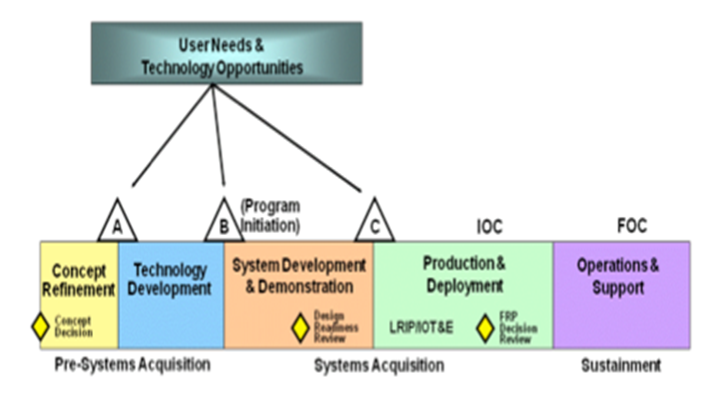
図1:取得プロセスモデル(DAU 2010)。Released by Defense Acquisition University (DAU)/U.S. Department of Defense (DoD).
Procurement and Acquisition
Procurement is the act of buying goods and services. Acquisition covers the conceptualization, initiation, design, development, testing, contracting, production, deployment, logistics support, modification, and disposal of weapons and other systems, as well as supplies or services (including construction) to satisfy organizational needs intended for use in, or in support of, defined missions (DAU 2010; DoD 2001).
調達(procurement)とは、物品やサービスを購入する行為である。取得(acquisition)は、定義されたミッションでの使用またはその支援を目的とした組織のニーズを満たすために行う、兵器その他のシステム、ならびに供給品やサービス(建設を含む)の概念化、開始、設計、開発、試験、契約、生産、展開、ロジスティクス支援、改修、廃棄を対象とする(DAU 2010; DoD 2001)。
Acquisition covers a much broader range of topics than procurement. Acquisition spans the whole life cycle of acquired systems. The procurement of appropriate systems engineering (SE) acquisition activities and levels of SE support is critical for an organization to meet the challenge of developing and maintaining complex systems.
取得は、調達よりもはるかに広範なトピックを対象とする。取得は、取得されるシステムのライフサイクル全体に及ぶ。組織が複雑なシステムを開発し維持するという課題に応えるには、適切なシステムズエンジニアリング(SE)取得アクティビティと適切なレベルの SE 支援を調達することが不可欠である。
The Guide for Integrating Systems Engineering into DoD Acquisition Contracts addresses how systems engineering activities are integrated into the various elements of acquisition and procurement (DoD 2006a).
Guide for Integrating Systems Engineering into DoD Acquisition Contracts は、システムズエンジニアリングアクティビティが取得と調達のさまざまな要素にどのように統合されるかを取り上げている(DoD 2006a)。
Multiple acquisition process models exist. An acquisition process for major systems in industry and defense is shown in Figure 1. The process of acquisition is defined by a series of phases during which technology is defined and matured into viable concepts. These concepts are subsequently developed and readied for production, after which the systems produced are supported in the field.
取得プロセスモデルは複数存在する。産業界および防衛分野における主要システムの取得プロセスを図1に示す。取得のプロセスは一連のフェーズによって定義され、その過程で技術が定義され、実現可能な概念へと成熟していく。こうして得られた概念は続いて開発されて生産の準備が整えられ、その後、生産されたシステムが現場で支援される。
Acquisition planning is the process of identifying and describing needs, capabilities, and requirements, as well as determining the best method for meeting those requirements (e.g., program acquisition strategy). This process includes procurement; thus, procurement is directly linked to the acquisition process model. The process model present in Figure 1 allows a given acquisition to enter the process at any of the development phases.
取得計画とは、ニーズ、能力、要求事項を特定・記述するとともに、それらの要求事項を満たす最良の方法(例えばプログラム取得戦略)を決定するプロセスである。このプロセスには調達が含まれるため、調達は取得プロセスモデルと直接結び付いている。図1に示すプロセスモデルでは、個々の取得が開発フェーズのどの段階からでもプロセスに入ることができる。
For example, a system using unproven technology would enter at the beginning stages of the process and would proceed through a lengthy period of technology maturation. On the other hand, a system based on mature and proven technologies might enter directly into engineering development or sometimes even production.
例えば、未実証の技術を用いるシステムは、プロセスの初期段階から入り、長期にわたる技術成熟の期間を経ていく。一方、成熟し実証済みの技術に基づくシステムは、エンジニアリング開発に直接入ることもあれば、場合によっては生産から入ることさえある。
図中の英語
The procurement of complex systems usually requires a close relationship between the offeror and supplier SE teams due to the breadth and depth of SE activities. SE is an overarching process that the program team applies in order to transition from a stated capability need to an affordable, operationally effective, and suitable system.
複雑なシステムの調達では、SE アクティビティの幅と深さゆえに、通常、提案者側と供給者側の SE チームの間に緊密な関係が必要となる。SE は、明示された能力ニーズから、手頃で運用上効果的かつ適切なシステムへと移行するためにプログラムチームが適用する包括的なプロセスである。
SE is important to every phase of the acquisition process. SE encompasses the application of SE processes across the acquisition life cycle and is intended to be an integrating mechanism for balanced solutions addressing capability needs, design considerations, and constraints. It is also intended to address limitations imposed by technology, budget, and schedule.
SE は、取得プロセスのあらゆるフェーズにとって重要である。SE は取得ライフサイクル全体にわたる SE プロセスの適用を包含するものであり、能力ニーズ、設計上の考慮事項、制約に対処するバランスの取れたソリューションに向けた統合の仕組みとなることが意図されている。また、技術、予算、スケジュールによって課される制約に対処することも意図されている。
SE is an interdisciplinary approach; that is, it is a structured, disciplined, and documented technical effort to simultaneously design and develop system products and processes to satisfy the needs of the customer. Regardless of the scope and type of program, or at what point it enters the program acquisition life cycle, the technical approach to the program needs to be integrated with the acquisition strategy to obtain the best program solution.
SE は学際的なアプローチである。すなわち、顧客のニーズを満たすために、システム製品とプロセスを同時に設計・開発する、構造化され、統制され、文書化された技術的取り組みである。プログラムの範囲や種類にかかわらず、またプログラム取得ライフサイクルのどの時点から入るかにかかわらず、プログラムに対する技術的アプローチは、最良のプログラムソリューションを得るために、取得戦略(acquisition strategy)と統合される必要がある。
Acquisition and procurement in the commercial sector have many characteristics in common with their counterparts in the realm of government contracting, although the processes in the commercial world are usually accomplished with fewer rigors than occur between government and contractor interactions. Offshore outsourcing is commonly practiced in the commercial software arena with the goal of reducing the cost of labor. Commercial organizations sometimes subcontract with other commercial organizations to provide missing expertise and to balance the ebb and flow of staffing needs.
商業部門における取得と調達には、政府契約の領域における取得・調達と共通する特徴が多いが、商業の世界のプロセスは通常、政府と請負業者のやり取りに比べて厳密さの低い形で遂行される。商用ソフトウェアの分野では、労務コストの削減を目的として、オフショアアウトソーシングが広く行われている。商業組織は、不足している専門知識を補い、人員配置ニーズの増減のバランスを取るために、他の商業組織と下請契約を結ぶことがある。
In some cases, relations between the contracting organization and the subcontractor are strained because of the contracting organization’s desire to protect its intellectual property and development practices from potential exposure to the subcontractor. Commercial organizations often have lists of approved vendors that are used to expedite the procurement of needed equipment, products, and services. In these situations, commercial organizations have processes to evaluate and approve vendors in ways that are analogous to the qualification of government contractors. Many commercial organizations apply SE principles and procedures even though they may not identify the personnel and job functions as “systems engineers” or “systems engineering.”
場合によっては、契約組織が自らの知的財産と開発実践を下請業者の目に触れるおそれから守りたいと考えるために、契約組織と下請業者の関係がぎくしゃくすることがある。商業組織は、必要な機器、製品、サービスの調達を迅速化するために用いられる承認済みベンダーのリストをしばしば持っている。このような場合、商業組織は、政府請負業者の資格認定に類似した方法でベンダーを評価・承認するプロセスを備えている。多くの商業組織は、人員や職務機能を「システムエンジニア」や「システムズエンジニアリング」と呼んでいない場合でも、SE の原則と手順を適用している。
The acquisition strategy is usually developed during the front end of the acquisition life cycle. (For an example of this, see the Technology Development Phase in Figure 1.) The acquisition strategy provides the integrated strategy for all aspects of the acquisition program throughout the program life cycle.
取得戦略(acquisition strategy)は通常、取得ライフサイクルの初期段階に策定される。(その一例として、図1の技術開発フェーズを参照のこと。)取得戦略は、プログラムライフサイクル全体を通じて、取得プログラムのすべての側面に対する統合された戦略を提供する。
In essence, the acquisition strategy is a high-level business and technical management approach designed to achieve program objectives within specified resource constraints. It acts as the framework for planning, organizing, staffing, controlling, and leading a program, as well as for establishing the appropriate contract mechanisms. It provides a master schedule for research, development, testing, production, fielding, and other SE related activities essential for program success, as well as for formulating functional strategies and plans.
本質的に、取得戦略とは、指定された資源制約の中でプログラム目標を達成するよう設計された、高レベルの事業および技術マネジメントのアプローチである。取得戦略は、プログラムの計画、編成、人員配置、管理、指揮のための枠組みとして、また適切な契約の仕組みを確立するための枠組みとして機能する。これは、研究、開発、試験、生産、配備、その他プログラムの成功に不可欠な SE 関連アクティビティに加え、機能別の戦略と計画の策定についても、マスタースケジュールを示す。
The offeror’s program team, including systems engineering, is responsible for developing and documenting the acquisition strategy, which conveys the program objectives, direction, and means of control based on the integration of strategic, technical, and resource concerns. A primary goal of the acquisition strategy is the development of a plan that will minimize the time and cost of satisfying an identified, validated need while remaining consistent with common sense and sound business practices. While the contract officer (CO) is responsible for all contracting aspects, including determining which type of contract is most appropriate, and following the requirements of existing regulations, directives, instructions, and policy memos of an organization, the program manager (PM) works with the CO to develop the best contract/procurement strategy and contract types.
システムズエンジニアリングを含む提案者のプログラムチームは、戦略・技術・資源に関する関心事項の統合に基づいてプログラムの目標、方向性、管理手段を伝える取得戦略を、策定し文書化する責任を負う。取得戦略の主要な目標は、常識と健全な事業慣行に沿いつつ、特定され妥当性確認されたニーズを満たすための時間とコストを最小化する計画を策定することである。契約担当官(CO)は、どの種類の契約が最も適切かの判断や、組織の既存の規則、指令、指示、方針メモの要求事項への準拠を含め、契約に関するすべての側面に責任を負う一方、プログラムマネージャ(PM)は CO と協働して、最良の契約/調達戦略と契約タイプを策定する。
There are several formats for requesting proposals from offerors for building complex systems. Figure 2 relates acquisition program elements to a representative request for proposal (RFP) topical outline and key program technical attributes that have been used by the Department of Defense. In general, programs have a better chance of success when both the offeror and supplier understand the technical nature of the program and the need for the associated SE activities.
複雑なシステムを構築するための提案を提案者に依頼する形式はいくつかある。図2は、取得プログラムの要素を、国防総省が用いてきた代表的な提案依頼(RFP)のトピックアウトラインおよび主要なプログラム技術属性と関連付けたものである。一般に、提案者と供給者の双方がプログラムの技術的性質と、それに伴う SE アクティビティの必要性を理解している場合に、プログラムが成功する可能性は高くなる。
The offeror and supplier need to clearly communicate the technical aspect of the program throughout the procurement process. The offeror’s RFP and the associated supplier proposal represent one of the formal communications paths. A partial list of key program technical attributes is presented in Figure 2.
提案者と供給者は、調達プロセス全体を通じて、プログラムの技術的側面を明確に伝え合う必要がある。提案者の RFP と、それに対応する供給者の提案は、正式なコミュニケーション経路の1つである。主要なプログラム技術属性の一部を図2に示す。
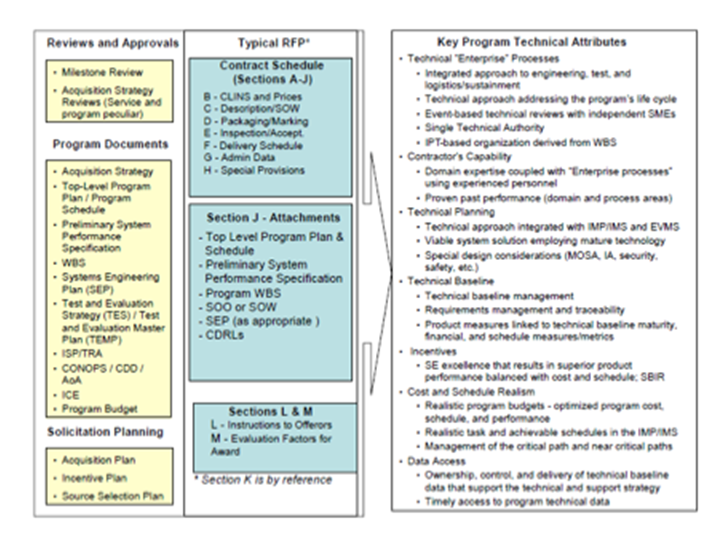
図中の英語
A clear understanding of the technical requirements is enhanced via the development of a Systems Engineering Plan (SEP). The SEP documents the systems engineering strategy for a project or program and acts as the blueprint for the conduct, management, and control of the technical aspects of the acquisition program (DoD 2011). The SEP documents the SE structure and addresses government and contractor boundaries. It summarizes the program’s selected acquisition strategy and identifies and links to program risks. It also describes how the contractor's, and sometimes the subcontractor's and suppliers', technical efforts are to be managed.
Once the technical requirements are understood, a contract may be developed and followed by the solicitation of suppliers. The offeror's PM, chief or lead systems engineer, and CO must work together to translate the program’s acquisition strategy and associated technical approach (usually defined in a SEP) into a cohesive, executable contract(s).
Table 1 shows some key contracting-related tasks with indicators of the roles of the PM and LSE.
システムズエンジニアリング計画(Systems Engineering Plan、SEP)を策定することで、技術要求事項をより明確に理解できるようになる。SEP は、プロジェクトやプログラムのシステムズエンジニアリング戦略を文書化したものであり、取得プログラムの技術的側面を遂行、マネジメント、管理するための青写真として機能する(DoD 2011)。SEP は SE の構造を文書化し、政府と請負業者の境界を扱う。これは、プログラムで選択された取得戦略を要約し、プログラムリスクを特定してそれらと関連付ける。また、請負業者、場合によっては下請業者や供給者の技術的取り組みをどのようにマネジメントすべきかを記述する。
技術要求事項が理解されると、契約が策定され、続いて供給者の募集が行われることがある。提案者の PM、主任またはリードシステムエンジニア、CO は、プログラムの取得戦略とそれに関連する技術的アプローチ(通常は SEP で定義される)を、一貫性のある実行可能な契約へと落とし込むために協力しなければならない。
表1は、主要な契約関連タスクの一部を、PM と LSE の役割の指標とともに示したものである。
表1:提案者のシステムズエンジニアリングとプログラムマネジメントの役割(DoD 2006) Released by the U.S. Office of the Secretary of Defense.
| + Table 1. Offeror’s Systems Engineering and Program Management Roles (DoD 2006). Released by the U.S. Office of the Secretary of Defense. ''' |
| Typical Contract-Related Activities |
|---|
| Systems Engineer and Project Manager Roles |
| 1. Identify overall procurement requirements and associated budget. Describe the offer’s needs and any constraints on the procurement. |
| 1. Lead systems engineer (LSE) provides program technical requirements. PM provides any programmatic related requirements. |
| 2. Identify technical actions required to successfully complete technical and procurement milestones. The program’s SEP is the key source for capturing this technical planning. |
| 2. LSE defines the technical strategy/approach and required technical efforts. This should be consistent with the program’s Acquisition Strategy. |
| 3. Document market research results and identify potential industry sources. |
| 3. PM and LSE identify programmatic and technical information needed and assist in evaluating the results. |
| 4. Prepare a Purchase Request, including product descriptions; priorities, allocations and allotments; architecture; government-furnished property or equipment (or Government-Off-The-Shelf (GOTS); government-furnished information; information assurance and security considerations; and required delivery schedules. |
| 4. PM and LSE ensure the specific programmatic and technical needs are defined clearly (e.g., commercial-off-the-shelf (COTS) products). |
| 5. Identify acquisition streamlining approach and requirements, budgeting and funding, management information requirements, environmental considerations, offeror’s expected skill sets, and milestones. These should be addressed in the Acquisition Strategy. |
| 5. The procurement team work together, but the CO has the prime responsibility. |
| 6. Plan the requirements for the contract Statement of Objectives (SOO) / Statement of Work (SOW) / specification, project technical reviews, acceptance requirements, and schedule. |
| 6. LSE is responsible for the development of the technical aspects of the SOO/SOW. |
| 7. Plan and conduct Industry Days as appropriate. |
| 7. PM and LSE support the CO in planning the meeting agenda to ensure technical needs are discussed. |
| 8. Establish contract cost, schedule, and performance reporting requirements. Determine an incentive strategy and appropriate mechanism (e.g., Award Fee Plan and criteria). |
| 8. LSE provides technical resource estimates. |
| 9. Identify data requirements. |
| 9. LSE identifies all technical Contractor Data Requirements List (CDRL) and technical performance expectations. |
| 10. Establish warranty requirements, if applicable. |
| 10. LSE works with the CO to determine cost-effective warranty requirements. |
| 11. Prepare a Source Selection Plan (SSP) and RFP (for competitive contracts). |
| 11. PM and LSE provide input to the SSP per the SOO/SOW. |
| 12. Conduct source selection and award the contract to the successful offeror. |
| 12. PM and LSE participate on evaluation teams. |
| 典型的な契約関連アクティビティ | システムエンジニアとプロジェクトマネージャの役割 |
|---|---|
| 1. 全体的な調達要求事項とそれに関連する予算を特定する。提案のニーズと、調達に対する制約を記述する。 | 1. リードシステムエンジニア(LSE)は、プログラムの技術要求事項を提供する。PM は、プログラム上の関連要求事項を提供する。 |
| 2. 技術および調達のマイルストーンを首尾よく完了するために必要な技術的アクションを特定する。プログラムの SEP は、この技術計画を記録するための主要な情報源である。 | 2. LSE は、技術戦略/アプローチと必要な技術的取り組みを定義する。これはプログラムの取得戦略と整合しているべきである。 |
| 3. 市場調査の結果を文書化し、候補となる民間の供給元を特定する。 | 3. PM と LSE は、必要となるプログラム上および技術上の情報を特定し、結果の評価を支援する。 |
| 4. 製品の記述、優先順位、割当てと配分、アーキテクチャ、政府支給財産または機器(または Government-Off-The-Shelf (GOTS))、政府支給情報、情報保証とセキュリティの考慮事項、必要な納入スケジュールを含む購入依頼を準備する。 | 4. PM と LSE が、具体的なプログラム上および技術のニーズが明確に定義されることを確実にする(例えば市販の既成(COTS)製品)。 |
| 5. 取得合理化のアプローチと要求事項、予算編成と資金調達、マネジメント情報に関する要求事項、環境への考慮事項、提案者に期待されるスキルセット、マイルストーンを特定する。これらは取得戦略で取り上げるべきである。 | 5. 調達チームは協力して作業するが、主たる責任は CO にある。PM はプログラム取得戦略の所有者である。LSE は技術戦略を策定・レビューする(承認は PM が行う)。 |
| 6. 契約の目標ステートメント(SOO)/作業ステートメント(SOW)/仕様、プロジェクトの技術レビュー、受入要求事項、スケジュールに関する要求事項を計画する。 | 6. LSE は、SOO/SOW の技術的側面の策定に責任を負う。 |
| 7. 適切な場合、インダストリーデーを計画し実施する。 | 7. PM と LSE は、技術ニーズが確実に議論されるよう、会議の議題を計画する CO を支援する。 |
| 8. 契約のコスト、スケジュール、性能に関する報告要求事項を確立する。インセンティブ戦略と適切な仕組み(例えば Award Fee Plan と基準)を決定する。 | 8. LSE は、技術資源の見積りを提供する。LSE は、予備的なシステム仕様に基づく作業分解構造(WBS)の策定を支援し、主要な技術レビューのためのイベント駆動型の基準を決定し、どの技術成果物をベースライン化するかを決定する。PM と LSE は、インセンティブの仕組みのための指標/基準の策定について CO に助言する。 |
| 9. データ要求事項を特定する。 | 9. LSE は、技術関連のすべての契約者データ要求リスト(CDRL)と、技術性能に対する期待を特定する。 |
| 10. 該当する場合は、保証要求事項を確立する。 | 10. LSE は CO と協働して、費用対効果の高い保証要求事項を決定する。 |
| 11. 調達先選定計画(SSP)と RFP を準備する(競争契約の場合)。 | 11. PM と LSE が、SOO/SOW に従って SSP に入力を提供する。 |
| 12. 調達先選定を実施し、落札した提案者に契約を授与する。 | 12. PM と LSE は、評価チームに参加する。 |
There should be an environment of open communication prior to the formal source selection process. This ensures that the supplier understands the offeror’s requirements and that the offeror understands the supplier's capabilities and limitations, as well as enhancing the supplier's involvement in the development of a program acquisition strategy. During the pre-solicitation phase, the offeror develops the solicitation and may ask suppliers to provide important insights into the technical challenges, program technical approach, and key business motivations.
正式な調達先選定プロセスに先立って、開かれたコミュニケーションの環境があるべきである。これにより、供給者が提案者の要求事項を理解し、提案者が供給者の能力と限界を理解することが確実になるとともに、プログラム取得戦略の策定への供給者の関与も深まる。募集前のフェーズでは、提案者は募集を策定するとともに、技術的課題、プログラムの技術的アプローチ、主要な事業上の動機について重要な洞察を提供するよう供給者に求めることがある。
For example, potential bidders could be asked for their assessment of a proposed system's performance based on the maturity level of new and existing technologies.
例えば、潜在的な入札者に、新規および既存の技術の成熟度レベルに基づいて、提案されたシステムの性能の評価を求めることがある。
Typical types of contracts include the following:
典型的な契約の種類には、次のようなものがある。
*Fixed Price: In a fixed price contract the offeror proposes a single price for all products and services to implement the project. This single price is sometimes referred to as low bid or lump sum. A fixed price contract transfers the project risks to the supplier. When there is a cost overrun, the supplier absorbs it. If the supplier performs better than planned, their profit is higher. Since all risks are absorbed by the supplier, a fixed price bid may be higher to reflect this.
• 確定価格(Fixed Price):確定価格契約では、提案者はプロジェクトを実施するためのすべての製品とサービスに対して単一の価格を提示する。この単一の価格は、最低入札価格または一括価格と呼ばれることがある。確定価格契約では、プロジェクトリスクが供給者に移転される。コスト超過が発生した場合は、供給者がそれを吸収する。供給者が計画を上回る実績を上げれば、その利益は大きくなる。すべてのリスクを供給者が吸収するため、確定価格の入札額はそれを反映して高くなることがある。
*Cost-reimbursement [Cost plus]: In a cost-reimbursement contract the offeror provides a fixed fee, but also reimburses the contractor for labor, material, overhead, and administration costs. Cost-reimbursement type contracts are used when there is a high level of project risk and uncertainty. With this type of contract, the risks reside primarily with the offeror. The supplier gets reimbursed for all of its costs. Additional costs that arise due to changes or rework are covered by the offeror. This type of contract is often recommended for the system definition of hardware and software development when there is a risk of stakeholder changes to the system.
• コスト償還(Cost-reimbursement)[Cost plus]:コスト償還契約では、提案者は固定のフィーを支払うが、労務費、材料費、間接費、管理費についても請負業者に償還する。コスト償還型の契約は、プロジェクトのリスクと不確実性が高い場合に用いられる。この種の契約では、リスクは主として提案者側にある。供給者は、自らのすべてのコストについて償還を受ける。変更や手戻りによって生じる追加コストは、提案者が負担する。この種の契約は、ステークホルダーによるシステムへの変更のリスクがある場合に、ハードウェアおよびソフトウェア開発のシステム定義にしばしば推奨される。
*Subcontracts: A subcontractor performs work for another company as part of a larger project. A subcontractor is hired by a general contractor (also known as a prime or main contractor) to perform a specific set of tasks as part of the overall project. The incentive to hire subcontractors is either to reduce costs or to mitigate project risks. The systems engineering team is involved in establishing the technical contract requirements, technical selection criteria, acceptance requirements, and the technical monitoring and control processes.
• 下請契約(Subcontracts):下請業者は、より大きなプロジェクトの一部として、他社のために作業を行う。下請業者は、プロジェクト全体の一部として特定の一連のタスクを実施するために、元請業者(プライムまたは主契約者とも呼ばれる)に雇われる。下請業者を雇う動機は、コストの削減かプロジェクトリスクの軽減のいずれかである。システムズエンジニアリングチームは、技術契約要求事項、技術選定基準、受入要求事項、技術的な監視と管理のプロセスの確立に関与する。
*Outsource contracts: Outsourced contracts are used to obtain goods or services by contracting with an outside supplier. Outsourcing usually involves contracting a business function, such as software design and code development, to an external provider.
• アウトソース契約(Outsource contracts):アウトソース契約は、外部の供給者と契約することで物品やサービスを入手するために用いられる。アウトソーシングでは通常、ソフトウェア設計やコード開発といった事業機能を、外部の提供者に委託する契約を結ぶ。
*Exclusively Commercial Off-the-Shelf (COTS): Exclusively COTS contracts are completely satisfied with commercial solutions that require no modification for use. COTS solutions are used in the environment without modifying the COTS system. They are integrated into an existing user's platform or integrated into an existing operational environment. The systems engineering team is involved in establishing the technical contract requirements, technical acceptance, and technical selection criteria.
• 純粋な市販の既成(COTS):純粋な COTS 契約は、使用にあたって修正を必要としない商用ソリューションによって完全に満たされる。COTS ソリューションは、COTS システムに修正を加えることなく、その環境で使用される。それらは、既存ユーザーのプラットフォーム、または既存の運用環境に統合される。システムズエンジニアリングチームは、技術契約要求事項、技術的な受入、技術選定基準の確立に関与する。
*Integrated COTS: Integrated COTS contracts use commercially available products and integrate them into existing user platforms or operational environments. In some cases, integrated COTS solutions modify the system's solution. The cost of integrating the commercial COTS product into the operational environment can exceed the cost of the COTS product itself. As a result, the systems engineering team is usually involved in establishing the technical outsourcing contract requirements, technical selection criteria, technical monitoring and control processes, and technical acceptance and integration processes.
• 統合 COTS:統合 COTS 契約は、市販の製品を用い、それらを既存のユーザープラットフォームや運用環境に統合する。場合によっては、統合 COTS ソリューションがシステムのソリューションに修正を加える。商用 COTS 製品を運用環境に統合するコストが、COTS 製品自体のコストを上回ることもある。そのため、システムズエンジニアリングチームは通常、技術アウトソーシング契約要求事項、技術選定基準、技術的な監視と管理のプロセス、技術的な受入と統合のプロセスの確立に関与する。
*COTS Modification: COTS modification requires the most time and cost because of the additional work needed to modify the COTS product and integrate it into the system. Depending on how complex and critical the need is, the systems engineering team is usually involved in establishing the technical outsource contract requirements, technical selection criteria, technical monitoring and control processes, and technical acceptance requirements.
• COTS 修正:COTS 修正は、COTS 製品を修正してシステムに統合するための追加作業が必要となるため、最も多くの時間とコストを要する。ニーズの複雑さと重要度に応じて、システムズエンジニアリングチームは通常、技術アウトソース契約要求事項、技術選定基準、技術的な監視と管理のプロセス、技術的な受入要求事項の確立に関与する。
*IT services: IT services provide capabilities that can enable an enterprise, application, or Web service solution. IT services can be provided by an outsourced service provider. In many cases, the user interface for these Web services is as simple as a Web browser. Depending on how complex and critical the needs are, the systems engineering team can be involved in establishing the technical outsourcing contract requirements, technical selection criteria, and technical acceptance process.
• IT サービス:IT サービスは、エンタープライズ、アプリケーション、または Web サービスのソリューションを可能にする能力を提供する。IT サービスは、アウトソース先のサービス提供者が提供することもできる。多くの場合、これらの Web サービスのユーザーインタフェースには、Web ブラウザ程度の簡単なもので足りる。ニーズの複雑さと重要度に応じて、システムズエンジニアリングチームは、技術アウトソーシング契約要求事項、技術選定基準、技術的な受入プロセスの確立に関与しうる。
Defense Acquisition University (DAU). Defense Acquisition Guidebook (DAG). Ft. Belvoir, VA, USA: DAU/US Department of Defense (DoD). 2010.
Department of Defense (DoD). Systems Engineering Plan (SEP) Outline. Washington, DC, USA: Office of the Undersecretary of Defense for Acquisition, Transportation, and Logistics (AT&L), US DoD. 2011.
DoD. Guide for Integrating Systems Engineering into DoD Acquisition Contracts. Washington, DC, USA: Office of the Undersecretary of Defense for AT&L, U.S. DoD. 2006.
DoD. Systems Engineering Fundamentals. Washington, DC, USA: DAU Press/US DoD. 2001.
DAU. Defense Acquisition Guidebook (DAG). Ft. Belvoir, VA, USA: DAU/US DoD. 2010.
DoD. Systems Engineering Plan (SEP) Outline. Washington, DC, USA: Office of the Undersecretary of Defense for AT&L, US DoD. 2011.
DoD. Guide for Integrating Systems Engineering into DoD Acquisition Contracts. Washington, DC, USA: Office of the Undersecretary of Defense for AT&L, US DoD. 2006.
DoD. Guide for Integrating Systems Engineering into DoD Acquisition Contracts. Washington, DC, USA: Office of the Undersecretary of Defense for AT&L, U.S. DoD. 2006.
MITRE. "Acquisition Systems Engineering." Systems Engineering Guide. 2011. Available: <nowiki>https://www.mitre.org/work/systems_engineering/guide/acquisition_systems_engineering/</nowiki>.
MITRE. "Acquisition Systems Engineering." Systems Engineering Guide. 2011. Available: https://www.mitre.org/work/systems_engineering/guide/acquisition_systems_engineering/.