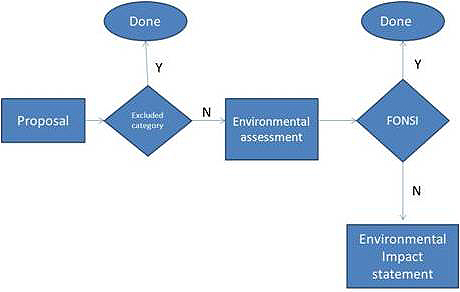
図1:EIS が必要かどうかを判断するためのフローチャート。(SEBoK Original)
Systems Engineering and Environmental Engineering
Environmental engineering addresses four issues that arise in system design and operation. They are: (1) design for a given operating environment, (2) environmental impact, (3) green design, and (4) compliance with environmental regulations.
環境工学は、システムの設計と運用において生じる4つの課題に対処する。すなわち、(1) 所与の運用環境に向けた設計、(2) 環境影響、(3) グリーン設計、(4) 環境規制への準拠である。
A system is designed for a particular operating environment. Product systems, in particular, routinely consider conditions of temperature and humidity. Depending on the product, other environmental conditions may need to be considered, including UV exposure, radiation, magnetic forces, vibration, and others. The allowable range of these conditions must be specified in the requirements for the system.
システムは特定の運用環境を想定して設計される。特に製品システムでは、温度や湿度の条件が日常的に考慮される。製品によっては、紫外線曝露、放射線、磁力、振動など、その他の環境条件も考慮する必要がある。これらの条件の許容範囲は、システムに対する要求事項の中で規定しなければならない。
The general principles for writing requirements also apply to specifying the operating environment for a system and its elements. Requirements are often written to require compliance with a set of standards.
要求事項(requirements)の記述に関する一般原則は、システムとその要素の運用環境を規定する場合にも適用される。要求事項は、一連の標準への準拠を求める形で書かれることが多い。
Many countries require assessment of environmental impact of large projects before regulatory approval is given. The assessment is documented in an environmental impact statement (EIS). In the United States, a complex project can require an EIS that greatly adds to the cost, schedule, and risk of the project.
多くの国では、大規模プロジェクトについて、規制当局の承認に先立って環境影響の評価を求めている。その評価は環境影響評価書(environmental impact statement, EIS)として文書化される。米国では、複雑なプロジェクトに EIS が必要となることがあり、それによってプロジェクトのコスト、スケジュール、リスクが大幅に増大する。
In the U.S., the process in Figure 1 is followed. A proposal is prepared prior to a project being funded. The regulator examines the proposal. If it falls into an excluded category, no further action is taken. If not, an environmental assessment is made. If that assessment determines a finding of no significant impact (FONSI), no further action is taken. In all other cases, an environmental impact statement is required.
米国では、図1のプロセスに従って手続きが進められる。プロジェクトに資金が提供される前に、提案書が作成される。規制当局はその提案書を審査する。除外カテゴリーに該当する場合、それ以上の措置は取られない。該当しない場合は、環境アセスメントが実施される。そのアセスメントで重大な影響がないという所見(finding of no significant impact, FONSI)が出された場合、それ以上の措置は取られない。それ以外のすべての場合には、環境影響評価書が必要となる。
図中の英語
Preparation of an EIS is a resource significant task. Bregman (2000) and Kreske (1996) provide accessible overviews of the process. Lee and Lin (2000) provide a handbook of environmental engineering calculations to aid in the technical submission. Numerous firms offer consulting services.
EIS の作成は、リソースの面で負担の大きいタスクである。Bregman (2000) と Kreske (1996) は、このプロセスを分かりやすく概説している。Lee and Lin (2000) は、提出用の技術資料の作成に役立つ、環境工学の計算ハンドブックを提供している。コンサルティングサービスを提供する企業も多い。
Basic references in the U.S. include the National Environmental Policy Act of 1969 and its implementing regulations (NEPA 1969) and the European Ccommission directive (EC 1985). State and local regulations can be extensive; Burby and Paterson (1993) discuss improving compliance.
米国における基本的な参考文献には、1969年の国家環境政策法とその施行規則(NEPA 1969)、および欧州委員会指令(EC 1985)が含まれる。州および地方の規制は広範囲に及ぶことがある。Burby and Paterson (1993) は、準拠の改善について論じている。
Depending on the scale of the project, the preparation of an EIS can take years and cost millions. For example, the EIS for the Honolulu light rail project took four years and cost $156M (Hill 2011). While a project may proceed even if the EIS finds a negative impact, opponents to a project may use the EIS process to delay a project. A common tactic is to claim the EIS was not complete in that it omitted some environmental impacts. Eccleston (2000) provides a guide to planning for EIS.
プロジェクトの規模によっては、EIS の作成に数年を要し、費用が数百万ドル規模に上ることがある。例えば、ホノルルのライトレール計画の EIS には4年を要し、$156M のコストがかかった(Hill 2011)。EIS が負の影響を見出したとしてもプロジェクトは進行し得るが、プロジェクトへの反対者は、EIS プロセスを用いてプロジェクトを遅らせることがある。よく用いられる戦術は、EIS が何らかの環境影響を省いており不完全であったと主張することである。Eccleston (2000) は、EIS に向けた計画策定の指針を示している。
There is a large amount of literature that has been published about design for energy efficiency. Lovins (2010) offers ten design principles. He also provides case studies (Lovins et al. 2011). Intel (2021) provides guidance for improving the energy efficiency of its computer chips. A great deal of information is also available in regard to the efficient design of structures; DOE (2011) provides a good overview.
エネルギー効率のための設計については、大量の文献が公表されている。Lovins (2010) は10の設計原則を提示している。また、事例研究も示している(Lovins et al. 2011)。Intel (2021) は、自社のコンピュータチップのエネルギー効率を改善するための指針を示している。構造物の効率的な設計についても、多くの情報が入手可能である。DOE (2011) は良い概観を提供している。
Increased energy efficiency can significantly reduce total life cycle cost for a system. For example, the Toyota Prius was found to have the lowest life cycle cost for 60,000 miles, three years despite having a higher initial purchase price (Brown 2011).
エネルギー効率の向上は、システムの総ライフサイクルコストを大幅に削減し得る。例えば、トヨタ・プリウスは、初期購入価格が高いにもかかわらず、60,000 マイル、3年間でのライフサイクルコストが最も低いことが分かった(Brown 2011)。
Increased attention is being paid to the emission of carbon dioxide. BSI British Standards offers a specification for assessing life cycle greenhouse emissions for goods and services (BSI 2011).
二酸化炭素の排出には、ますます注目が集まっている。BSI British Standards は、商品およびサービスのライフサイクルにおける温室効果ガス排出量を評価するための仕様を提供している(BSI 2011)。
Graedel and Allenby (2009), Maydl (2004), Stasinopoulos (2009), Meryman (2004), and Lockton and Harrison (2008) discuss design for sustainability. Sustainability is often discussed in the context of the UN report on Our Common Future (WCED 1987) and the Rio Declaration (UN 1992).
Graedel and Allenby (2009)、Maydl (2004)、Stasinopoulos (2009)、Meryman (2004)、Lockton and Harrison (2008) は、持続可能性のための設計について論じている。持続可能性は、国連の報告書『我ら共有の未来(Our Common Future)』(WCED 1987)やリオ宣言(UN 1992)の文脈で論じられることが多い。
An enterprise must attend to compliance with the various environmental regulations. Dechant et al. (1994) provide the example of a company in which 17% of every sales dollar goes toward compliance activities. They discuss gaining a competitive advantage through better compliance. Gupta (1995) studies how compliance can improve the operations function. Berry (1998) and Nash (2001) discuss methods for environmental management by the enterprise.
エンタープライズは、さまざまな環境規制への準拠に注意を払わなければならない。Dechant et al. (1994) は、売上1ドルのうち17%が準拠アクティビティに充てられている企業の例を示している。彼らは、準拠の改善を通じて競争優位を獲得することについて論じている。Gupta (1995) は、規制への準拠によって企業の業務運営機能がどのように改善され得るかを研究している。Berry (1998) と Nash (2001) は、エンタープライズによる環境マネジメントの方法について論じている。
ISO14001 sets the standards for organization to comply with environmental regulations. Kwon and Seo (2002) discuss this in a Korean context, and Whitelaw (2004) presents a handbook on implementing ISO14001.
ISO14001 は、組織が環境規制に準拠するための標準を定めている。Kwon and Seo (2002) は韓国の文脈でこれを論じており、Whitelaw (2004) は ISO14001 の導入に関するハンドブックを示している。
Depending on the product being developed, standards may exist for operating conditions. For example, ISO 9241-6 specifies the office environment for a video display terminal. Military equipment may be required to meet MILSTD 810G standard (DoD 2014) in the US, or DEF STAN 00-35 in the UK (MoD 2017).
開発する製品によっては、運用条件に関する標準が存在する場合がある。例えば、ISO 9241-6 はビデオ表示端末のオフィス環境を規定している。軍事装備には、米国では MILSTD 810G 標準(DoD 2014)、英国では DEF STAN 00-35(MoD 2017)への適合が求められる場合がある。
The U.S. Federal Aviation Administration publishes a list of EIS best practices (FAA 2002).
米国連邦航空局は、EIS のベストプラクティスの一覧を公表している(FAA 2002)。
The U.S. Environmental Protection Agency (EPA) defines as: the design, commercialization, and use of processes and products, which are feasible and economical, while minimizing (1) generation of pollution at the source and (2) risk to human health and the environment (EPA 2011). Green engineering embraces the concept that decisions to protect human health and the environment can have the greatest impact and cost effectiveness when applied early to the design and development phase of a process or product.
米国環境保護庁(EPA)は、グリーンエンジニアリング(Green Engineering)を次のように定義している。すなわち、(1) 発生源での汚染の発生と、(2) 人の健康および環境へのリスクを最小限に抑えつつ、実現可能かつ経済的なプロセスと製品を設計し、商業化し、利用することである(EPA 2011)。グリーンエンジニアリングには、人の健康と環境を守るための決定は、プロセスや製品の設計・開発フェーズの早い段階で適用されたときに最大の効果と費用対効果をもたらし得る、という考え方が含まれている。
The EPA (2011) offers the following principles of green engineering:
EPA (2011) は、グリーンエンジニアリングの原則として以下を示している。
• Engineer processes and products holistically, use systems analysis, and integrate environmental impact assessment tools.
• 全体論的な視点でプロセスと製品を設計し、システム分析を用い、環境影響評価ツールを統合する。
• Conserve and improve natural ecosystems while protecting human health and well-being.
• 人の健康と幸福を守りつつ、自然の生態系を保全し改善する。
• Use life-cycle thinking in all engineering activities.
• すべての工学アクティビティにおいてライフサイクル思考を用いる。
• Ensure that all material and energy inputs and outputs are as inherently safe and benign as possible.
• すべての物質とエネルギーの入出力が、可能な限り本質的に安全で無害であることを保証する。
• Minimize depletion of natural resources.
• 天然資源の枯渇を最小限に抑える。
• Strive to prevent waste.
• 廃棄物の発生防止に努める。
• Develop and apply engineering solutions, while being cognizant of local geography, aspirations, and cultures.
• 地域の地理、願望、文化を認識しながら、工学ソリューションを開発し適用する。
• Create engineering solutions beyond current or dominant technologies; additionally, improve, innovate, and invent (technologies) to achieve sustainability.
• 現行の技術や主流の技術を超える工学ソリューションを創出する。さらに、持続可能性を達成するために(技術を)改善し、革新し、発明する。
• Actively engage communities and stakeholders in development of engineering solutions.
• 工学ソリューションの開発に、コミュニティとステークホルダーを積極的に関与させる。
Berry, M. A. “Proactive Corporate Environmental Management: A New Industrial Revolution.” The Academy of Management Executive 12, no. 2: 38–50. 1998.
Bregman, J.I. Environmental Impact Statements, 2nd ed. Boca Raton, FL: CRC Press. 2000.
Brown, C. "The Green Fleet Price Tag." Business Fleet. 2011. <nowiki>https://www.businessfleet.com/Article/Story/2011/07/The-Green-Fleet-Price-Tag.aspx</nowiki>.
Brown, C. "The Green Fleet Price Tag." Business Fleet. 2011. https://www.businessfleet.com/Article/Story/2011/07/The-Green-Fleet-Price-Tag.aspx.
British Standards Institution (BSI). "Specification for the assessment of the life cycle greenhouse gas emissions of goods and service, PAS 2050:2011." British Standards Institution (BSI), London, UK: 2011. https://shop.bsigroup.com/en/forms/PASs/PAS-2050.
BSI. Specification for the Assessment of the Life Cycle Greenhouse Gas Emissions of Goods and Services: PAS 2050:2011. London: BSI. 2011. https://shop.bsigroup.com/en/forms/PASs/PAS-2050.
BSI. Specification for the Assessment of the Life Cycle Greenhouse Gas Emissions of Goods and Services: PAS 2050:2011. London: BSI. 2011. https://shop.bsigroup.com/en/forms/PASs/PAS-2050
Burby, R. J., and R. G. Paterson. “Improving Compliance with State Environmental Regulations.” Journal of Policy Analysis and Management 12, no. 4: 753–772.1993.
Dechant, K., B. Altman, R. M. Downing, and T. Keeney. “Environmental Leadership: From Compliance to Competitive Advantage.” Academy of Management Executive 8, no. 3: 7. 1994.
Department of Defense (DoD). Department of Defense Test Method Standard: Environmental Engineering Considerations and Laboratory Tests, MIL‑STD‑810G Change Notice 1. Washington, DC: US Army Test and Evaluation Command, US Department of Defense. Accessed May 15, 2022. https://everyspec.com/MIL-STD/MIL-STD-0800-0899/MIL-STD-810G_CHG-1_50560/. 2014.
Eccleston, C. Environmental Impact Statements: A Comprehensive Guide to Project and Strategic Planning. New York: Wiley. 2014.
Environmental Protection Agency (EPA). “Green Engineering.” United States Environmental Protection Agency. 2011. https://www.epa.gov/green-engineering.
European Commission (EC). “Council Directive of 27 June 1985 on the Assessment of the Effects of Certain Public and Private Projects on the Environment (85/337/EEC).” 1985. https://www.legislation.gov.uk/eudr/1985/337/pdfs/eudr_19850337_adopted_en.pdf.
Federal Aviation Administration (FAA). “Best Practices for Environmental Impact Statement (EIS) Management.” 2002. https://www.faa.gov/airports/environmental/eis_best_practices/?sect=intro.
Graedel, T. E., and B. R. Allenby. Industrial Ecology and Sustainable Engineering. Upper Saddle River, NJ: Prentice Hall. 2009.
Gupta, M. C. “Environmental Management and Its Impact on the Operations Function.” International Journal of Operations and Production Management 15, no. 8: 34–51. 1995
Hill, T. “Honolulu Rail’s Next Stop?” Honolulu Magazine, July 2011.
Intel. “Corporate Social Responsibility.” Intel Corporation. 2021. <nowiki>https://www.intel.com/intel/other/ehs/product_ecology/energy.htm</nowiki>.
Intel. “Corporate Social Responsibility.” Intel Corporation. 2021. https://www.intel.com/intel/other/ehs/product_ecology/energy.htm.
Kreske, D. L. Environmental Impact Statements: A Practical Guide for Agencies, Citizens, and Consultants. New York: Wiley. 1996.
Kwon, D. M., and M. S. Seo. “A Study of Compliance with Environmental Regulations of ISO 14001 Certified Companies in Korea.” Journal of Environmental Management 65, no. 4: 347–353. 2002.
Lee, C. C., and S. D. Lin. Handbook of Environmental Engineering Calculations. New York: McGraw Hill Professional. 2000.
Lockton, D., and D. Harrison. “Making the User More Efficient: Design for Sustainable Behaviour.” International Journal of Sustainable Engineering 1, no. 1: 3–8. 2008
Lovins, A. “Factor Ten Engineering Design Principles,” version 1.0. 2011. <nowiki>https://www.rmi.org/Knowledge-Center/Library/2010-10_10xEPrinciples</nowiki>.
Lovins, A. “Factor Ten Engineering Design Principles,” version 1.0. 2011. https://www.rmi.org/Knowledge-Center/Library/2010-10_10xEPrinciples.
Lovins, A., et al. “Case Studies.” 2011. https://move.rmi.org/markets-in-motion/case-studies/.
Maydl, P. “Sustainable Engineering: State-of-the-Art and Prospects.” Structural Engineering International 14, no. 3: 176–180. 2004.
Meryman, H. “Sustainable Engineering Using Specifications to Make It Happen.” Structural Engineering International 14, no. 3. 2004.
UK Ministry of Defence (MoD). Standard 00‑35, Environmental Handbook for Defence Materiel (Part 3) Environmental Test Methods. London: UK Ministry of Defence. 2017. https://standards.globalspec.com/std/10074175/def-stan-00-035-part-3.
Nash, J. Regulating From the Inside: Can Environmental Management Systems Achieve Policy Goals? Washington, DC: Resources for the Future Press. 2001.
National Environmental Policy Act (NEPA). 42 USC 4321–4347. 1969. https://ceq.doe.gov/laws-regulations/laws.html.
Stasinopoulos, P. Whole System Design: An Integrated Approach to Sustainable Engineering. London: Routledge. 2009.
United Nations (UN). “Rio Declaration on Environment and Development.” 1992. thttps://www.un.org/en/development/desa/population/migration/generalassembly/docs/globalcompact/A_CONF.151_26_Vol.I_Declaration.pdf.
Whitelaw, K. ISO 14001: Environmental Systems Handbook, 2nd ed. Oxford: Elsevier. 2004.
World Commission on Environment and Development (WCED). “Report of the World Commission on Environment and Development: Our Common Future.” 1987. https://sustainabledevelopment.un.org/milestones/wced.
Bregman, J.I. Environmental Impact Statements, 2nd ed. Boca Raton, FL: CRC Press. 2000.
Graedel, T. E., and B. R. Allenby. Industrial Ecology and Sustainable Engineering. Upper Saddle River, NJ: Prentice Hall. 2009.
Lee, C. C., and S. D. Lin. Handbook of Environmental Engineering Calculations. New York: McGraw Hill Professional. 2000.
Whitelaw, K. ISO 14001: Environmental Systems Handbook, 2nd ed. Oxford: Elsevier. 2004.
None.