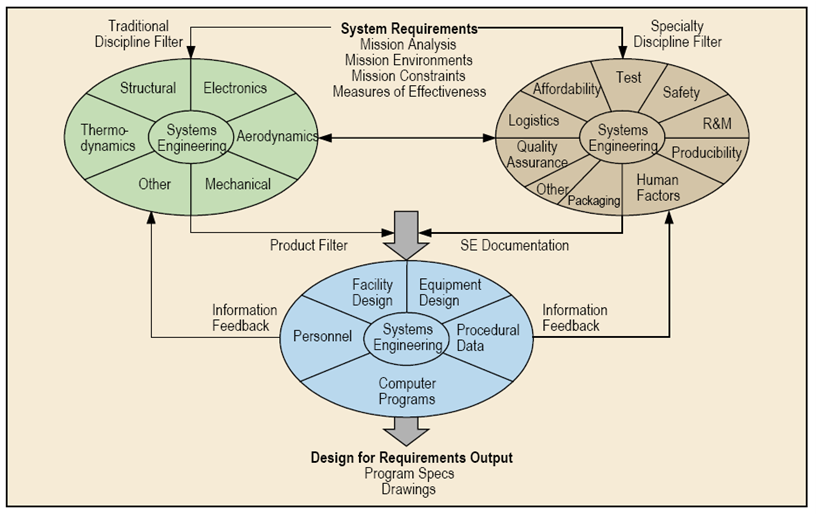
図1:専門工学の統合プロセス(USAF 2000)。Released by the U.S. Air Force.
Systems Engineering and Quality Attributes
Every system has a set of properties that are largely a function of the system as a whole rather than just its constituent parts. There are dozens of these properties such as security, reliability, safety, resistance to electromagnetic interference, usability, and resilience. This Knowledge Area (KA) describes many of the most important such properties and how they are realized. The vocabulary to talk about these properties is not standard. Alternatively, they are called quality attributes, non-functional requirements, -ilities, and specialties. In this KA, the term specialty engineering refers to the collective engineering of all quality attributes of a system.
あらゆるシステムは、個々の構成要素だけでは決まらず、主としてシステム全体のあり方に依存する特性の集合を持つ。セキュリティ、信頼性、安全性、電磁干渉への耐性、ユーザビリティ、レジリエンスなど、そうした特性は数十に及ぶ。本知識領域(knowledge area, KA)では、そうした特性のうち最も重要なものの多くと、それらがどのように実現されるかを述べる。これらの特性を語るための語彙は標準化されていない。これらは別名で「品質属性(quality attributes)」、「非機能要求(non-functional requirements)」、「-ilities」、「専門分野(specialties)」とも呼ばれる。本 KA では、専門工学(specialty engineering)という用語で、システムのすべての品質属性に対する工学を総称する。
Quality attributes are often interdependent rather than orthogonal; e.g. making a system more secure may make it harder to use but also safer. Increasing system reliability often requires using more expensive parts and adding redundant components. Hence, higher reliability often means higher cost to deliver a system – another system property. However, higher reliability might mean lower maintenance cost – another system property. A systems engineer typically makes many decisions and takes many actions with regard to system properties; e.g. specifying which properties are important for a particular system, stating how those properties will be measured, trading off conflicting properties, and verifying that a system has the specified properties. Barry Boehm (2016), as the lead for a project of the Systems Engineering Research Center, introduced an ontology to describe system quality attributes as a way of enabling smarter trade-offs between them and understanding the impact of those trades on cost. Also, see the article on Quality Management for more information on how these decisions and actions are managed. de Weck, et al. (2012) has a lengthy and insightful chapter on quality attributes (which they call -ilities).
品質属性は、互いに直交しているというより、相互に依存していることが多い。例えば、システムをよりセキュアにすると、使いにくくなる一方で、より安全にもなり得る。システムの信頼性を高めるには、しばしば、より高価な部品を使い、冗長な構成要素を追加する必要がある。したがって、信頼性が高いことは、多くの場合、システムを納入するコストが高いことを意味する——これもまた一つのシステム特性である。しかし、信頼性が高いことは、保全コストが低いことを意味する場合もある——これもまた別のシステム特性である。システムエンジニアは通常、システム特性に関して多くの決定を下し、多くの行動を取る。例えば、特定のシステムにとってどの特性が重要かを指定する、それらの特性をどのように測定するかを述べる、相反する特性の間でトレードオフを行う、システムが指定された特性を持つことを検証する、といったことである。Barry Boehm(2016)は、Systems Engineering Research Center のプロジェクトのリーダーとして、システム品質属性を記述するためのオントロジーを導入した。これは、品質属性間でより賢明なトレードオフを行えるようにし、そうしたトレードがコストに与える影響を理解するための方法である。また、これらの決定と行動がどのように管理されるかの詳細については、品質マネジメントの記事を参照のこと。de Weck et al.(2012)には、品質属性(彼らは「-ilities」と呼ぶ)に関する長く洞察に富んだ章がある。
Many consider specialty engineering to be a sub-discipline of SE itself; e.g. they consider security engineering, safety engineering, resilience engineering, etc. to be part of SE. Others consider them to be stand-alone disciplines in their own right with close ties to SE. Either way, their mastery is important to a system engineer. This KA includes topical articles on several specialty engineering disciplines. Some articles will treat the topic of the article as a sub-discipline of SE itself; others will treat it as a closely related but separate discipline. This disparity reflects both the diversity of opinions on this matter and the fact that SEBoK articles are written by a wide array of authors.
専門工学を SE そのものの一分野とみなす人は多い。例えば、彼らはセキュリティ工学、安全性工学、レジリエンス工学などを SE の一部とみなす。一方、それらを SE と密接な結びつきを持つ、それ自体で独立した分野とみなす人々もいる。いずれにせよ、それらを修得することはシステムエンジニアにとって重要である。本 KA には、いくつかの専門工学分野に関するトピック記事が含まれる。記事によって、そのトピックを SE そのものの一分野として扱うものもあれば、密接に関連するが別個の分野として扱うものもある。このばらつきは、この問題に関する意見の多様性と、SEBoK の記事が多種多様な著者によって執筆されているという事実の双方を反映している。
The systems engineering team must ensure that requirements about quality attributes (also called specialty requirements) are properly reviewed with regard to their impact on life cycle costs, development schedule, technical performance, and operational utility. For example, security requirements can impact operator workstations, electromagnetic interference requirements can impact the signal in the interfaces between subsystems, and mass-volume requirements may preclude the use of certain materials to reduce subsystem weight.
システムズエンジニアリングチームは、品質属性に関する要求事項(専門要求事項とも呼ばれる)が、ライフサイクルコスト、開発スケジュール、技術的性能、運用上の有用性への影響という観点から、適切にレビューされることを確実にしなければならない。例えば、セキュリティ要求事項はオペレータのワークステーションに、電磁干渉要求事項はサブシステム間のインタフェースにおける信号に、それぞれ影響を与え得るし、質量・体積要求事項によって、サブシステムの重量を減らすために特定の材料を使用することができなくなる場合もある。
Engineering specialists audit the evolving design and resulting configuration items to ensure that the overall system performance also satisfies the specialty requirements. Including appropriate specialty engineers within each systems engineering team ensures that all specialty requirements are identified and balanced throughout the development cycle.
工学の専門家は、進化していく設計とその結果として生じる構成品目を監査し、システム全体の性能が専門要求事項も満たすことを確実にする。各システムズエンジニアリングチームに適切な専門エンジニアを加えることで、すべての専門要求事項が開発サイクル全体を通じて特定され、バランスが取られることが確実になる。
Integration of specialty engineering into a project or program is, or should be, a major objective of systems engineering management. (Endler 2016, Kossiakoff et al. 2020) With properly implemented procedures, the rigor of the systems engineering process ensures participation of the specialty disciplines at key points in the technical decision-making process. Special emphasis on integration is mandatory because a given design could in fact be accomplished without consideration of these specialty disciplines, leading to the possibility of system ineffectiveness or failure when an unexamined situation occurs in the operational environment.
プロジェクトまたはプログラムへの専門工学の統合は、システムズエンジニアリングマネジメントの主要な目標である、あるいはそうあるべきである(Endler 2016, Kossiakoff et al. 2020)。手順が適切に実施されていれば、システムズエンジニアリングプロセスの厳密さによって、技術的な意思決定プロセスの重要な時点で専門分野が確実に参加することになる。統合を特に重視することは必須である。というのも、実際には、これらの専門分野を考慮しなくても設計自体は達成できてしまう可能性があり、その結果、運用環境で検討されていなかった状況が発生したときに、システムが有効に機能しない、あるいは失敗するおそれが生じるからである。
For example, human factors considerations can contribute to reduced workloads and therefore lower error rates by operators in aircraft cockpits, at air-traffic consoles, or in nuclear reactor stations. Similarly, mean-time-to-repair features can significantly increase overall system availability in challenging physical environments, such as mid-ocean or outer space or in safety critical environments such as hospital intensive care units or in traffic control systems in city centers. Specialty engineering requirements are often manifest as constraints on the overall system design space. The role of systems engineering is to balance these constraints with other functionality in order to harmonize total system performance. The end goal is to produce a system that provides utility and effectiveness to the customer at an affordable price.
例えば、人間工学(ヒューマンファクター)を考慮することは、航空機のコックピット、航空交通管制コンソール、原子炉施設において、作業負荷の軽減と、ひいてはオペレータのエラー率の低下に寄与し得る。同様に、平均修復時間に関わる特徴は、外洋や宇宙空間といった厳しい物理環境や、病院の集中治療室や都市中心部の交通管制システムといった安全上重要な環境において、システム全体の可用性を大幅に高めることができる。専門工学要求事項は、システム全体の設計空間に対する制約として現れることが多い。システムズエンジニアリングの役割は、システム総体の性能を調和させるために、これらの制約と他の機能性とのバランスを取ることである。最終的な目標は、手頃な価格で顧客に有用性と有効性を提供するシステムを生み出すことである。
As depicted in Figure 1, systems engineering plays a leadership role in integrating traditional disciplines, specialty disciplines, and unique system product demands to define the system design. Relationships for this integration process are represented as interactions among three filters.
図1に示すように、システムズエンジニアリングは、伝統的分野、専門分野、およびシステム製品固有の要求を統合してシステム設計を定義するうえで、主導的な役割を果たす。この統合プロセスにおける関係は、3つのフィルタの間の相互作用として表される。
The first filter is a conceptual analysis that leverages traditional design consideration (structural, electronics, aerodynamics, mechanical, thermodynamics, etc.). The second filter evaluates the conceptual approach using specialty disciplines, such as safety, affordability, quality assurance, human factors, reliability and maintainability, producibility, packaging, test, logistics, and others, to further requirements development. Design alternatives that pass through these two processes go through a third filter that incorporates facility design, equipment design, procedural data, computer programs, and personnel to develop the final requirements for design selection and further detailed development.
第1のフィルタは、伝統的な設計上の考慮事項(構造、電子、空力、機械、熱力学など)を活用する概念分析である。第2のフィルタは、安全性、手頃さ、品質保証、人間工学、信頼性と保全性、製造容易性、パッケージング、試験、ロジスティクスなどの専門分野を用いて概念的アプローチを評価し、要求事項の策定をさらに進める。これら2つのプロセスを通過した設計代替案は、施設設計、設備設計、手順データ、コンピュータプログラム、人員を取り込む第3のフィルタを通過し、そこで設計の選定とその後の詳細な開発のための最終要求事項が策定される。
図中の英語
Boehm, B. System Qualities Ontology, Tradespace, and Affordability (SQOTA) Project - Phase 4. Systems Engineering Research Center: Stevens Institute of Technology. February 2016. SERC-2016-TR-101. https://www.archive.sercuarc.org/wp-content/uploads/2014/05/SERC-2016-TR-101-Phase-4_RT-137.pdf.
de Weck, R. D. and C. Magee. Engineering Systems: Meeting Human Needs in a Complex Technological World. MIT Press. Chapter 4: "Life-Cycle Properties of Engineering Systems: The Ilities". 2012. https://www.amazon.com/Engineering-Systems-Meeting-Complex-Technological/dp/0262529947. Chapter 4 on the -ilities is also available at https://strategic.mit.edu/docs/es_book_004_proof.pdf. Accessed May 21, 2023.
Endler, D. "Integration of Specialty Engineering Activities." Proceedings of the 26th Annual International Council on Systems Engineering (INCOSE) International Symposium, July 18-21, 2016, Edinburgh, Scotland, UK.
Kossiakoff, A., W. N. Sweet, S.J. Seymour, and S. M. Biemerl. Systems Engineering Principles and Practice, 3rd ed. John Wiley & Sons, Inc: Hoboken, NJ. 2020.
USAF. Guidelines for Successful Acquisition and Management of Software-Intensive Systems: Weapon Systems Command and Control Systems Management Information Systems, version 3.0. Hill AFB: Department of the Air Force Software Technology Support Center. May 2000. https://onlinelibrary.wiley.com/doi/abs/10.1002/j.2334-5837.1999.tb00315.x.
USAF. Guidelines for Successful Acquisition and Management of Software-Intensive Systems: Weapon Systems Command and Control Systems Management Information Systems, version 3.0. Hill AFB: Department of the Air Force Software Technology Support Center. May 2000. https://onlinelibrary.wiley.com/doi/abs/10.1002/j.2334-5837.1999.tb00315.x.
None.