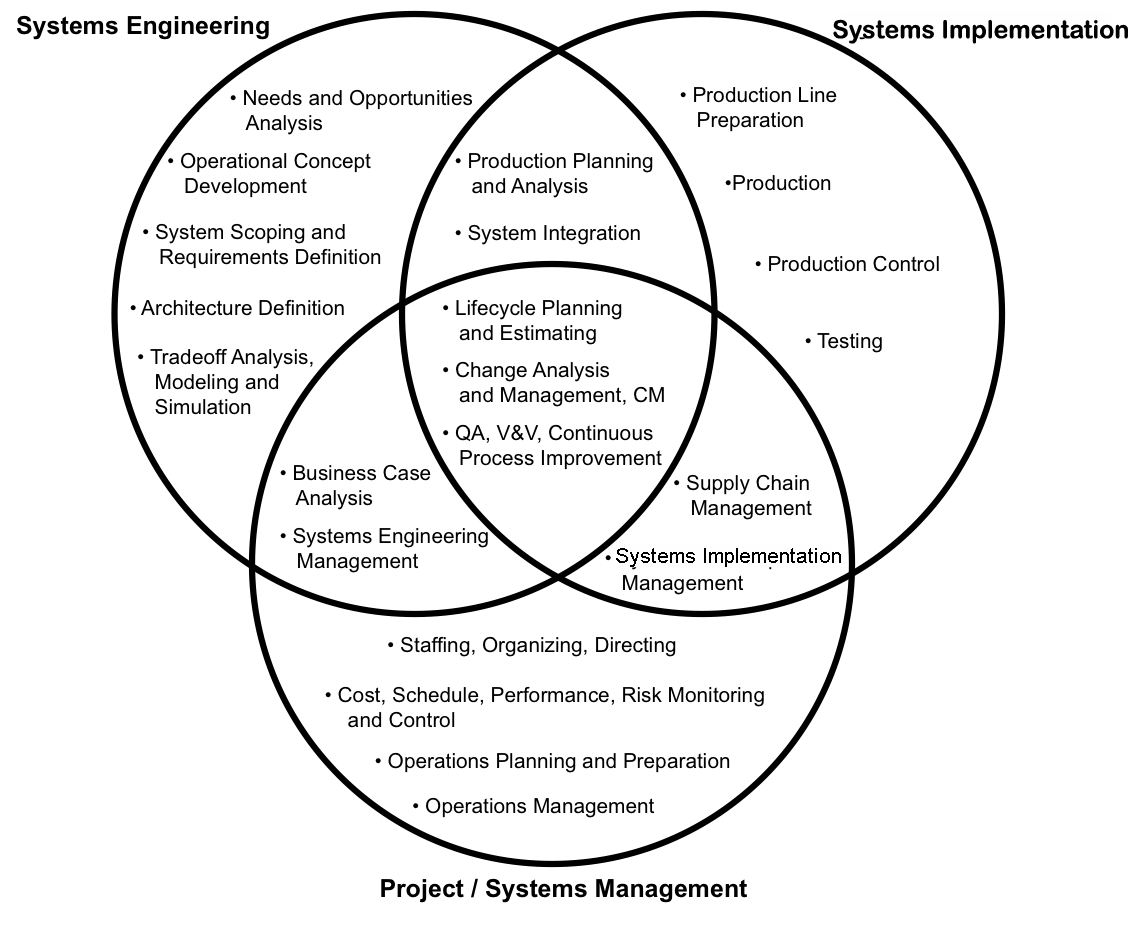
図3. システムズエンジニアリング、システム実装、プロジェクト/システムマネジメントのシステム境界。(SEBoK Original)
Systems Engineering Overview
Systems engineering (SE) is a transdisciplinary approach and means to enable the realization of successful systems. Successful systems must satisfy the needs of their customers, users and other stakeholders. This article discusses the complexities of systems and systems engineering (SE), highlighting how SE manages ambiguities in terminology and integrates with broader disciplines. It introduces specific SE definitions, emphasizing its focus on engineered systems and their contexts. SE's scope excludes activities like manufacturing. The article outlines SE's transdisciplinary approach and its role within the project life cycle, where it collaborates with various agents to create and evolve successful engineered systems. Notably, SE involves negotiating changes proposed by stakeholders and mediated by systems engineers. Overall, the article underscores SE's pivotal role in realizing and managing complex engineered systems within diverse environments.
システムズエンジニアリング(Systems Engineering、SE)は、成功するシステムの実現を可能にする超学際的なアプローチであり、手段である。成功するシステムは、顧客、利用者、その他のステークホルダーのニーズを満たさなければならない。本記事では、システムとシステムズエンジニアリング(SE)の複雑さを論じ、SE が用語の曖昧さにどう対処し、より広い分野とどう統合されるかを浮き彫りにする。SE に固有の定義を紹介し、SE がエンジニアード・システムとそのコンテキストに焦点を当てていることを強調する。SE の範囲には、製造のようなアクティビティは含まれない。本記事では、SE の超学際的なアプローチと、プロジェクトライフサイクルにおける SE の役割を概説する。プロジェクトライフサイクルにおいて SE は、さまざまな主体(エージェント)と協働し、成功するエンジニアード・システムを生み出し、進化させる。特に SE には、ステークホルダーが提案した変更についての交渉を、システムズエンジニアが仲介することが含まれる。総じて本記事は、多様な環境の中で複雑なエンジニアード・システムを実現し管理するうえで、SE が中核的な役割を担うことを強調する。
In the broad community, the term “system” may mean a collection of technical, natural or social elements, or a combination of all three. This may produce ambiguities at times: for example, does “management” refer to management of the SE process, or management of the system being engineered? As with many special disciplines, SE uses terms in ways that may be unfamiliar outside the discipline. For example, in systems science and therefore SE, “open” means that a system is able to interact with its environment--as opposed to being "closed” to its environment. However, in the broader engineering world we would read “open” to mean “non-proprietary” or “publicly agreed upon.” In such cases, the SEBoK tries to avoid misinterpretation by elaborating the alternatives e.g. “system management” or “systems engineering management”.
A useful introduction to systems engineering from Colorado Technical University can be found here: https://www.youtube.com/watch?v=aZXVRvZJT4I.
The SEBoK seeks to position SE within the broader scope of knowledge which considers systems as part of its foundations. To do this without attempting to re-define general systems terminology, SEBoK introduces two related definitions specific to SE: *An Sociotechnical System (glossary)|socio-technical system which is the subject of an SE System Context (glossary) centers around an engineered system but also includes in its relationships other engineered, social or natural systems in one or more defined environments. Since the province of SE is engineered systems, most SE literature assumes this in its terminology. Thus, in an SE discussion, “system architecture” would refer to the architecture of the system being engineered (e.g., a spacecraft) and not the architecture of a natural system outside its boundary (e.g., the solar system). In fact, a spacecraft architecture would cover the wider including external factors such as changes in gravity and external air pressure and how these affect the spacecraft's technical and human elements. Thus, the term "system architecture" more properly refers to the engineered system context. The SEBoK tries to be more explicit about this, but may still make these kinds of assumptions when referring directly to other SE literature.
An extensive glossary of terms identifies how terms are used in the SEBoK and shows how their meanings may vary in different contexts. As needed, the glossary includes pointers to articles providing more detail.
For more about the definition of systems, see the article What is a System? in Part 2. The primary focus of SEBoK Part 3: Systems Engineering and Management and Part 4: Applications of Systems Engineering is on how to create or change an engineered system to fulfill the goals of stakeholders within these wider system contexts. The knowledge in Part 5: Enabling Systems Engineering and Part 6: Systems Engineering and Other Disciplines examines the need for SE itself to be integrated and supported within the human activity systems in which it is performed, and the relationships between SE and other engineering and management disciplines.
The MATLAB team created this 15-minute overview of systems engineering as a discipline: https://www.youtube.com/watch?v=pSfZutP9H-U.
広いコミュニティでは、「システム」という用語は、技術的要素、自然的要素、社会的要素の集合、あるいはこれら3つすべての組み合わせを意味することがある。そのため、ときに曖昧さが生じる。例えば、「マネジメント」とは SE プロセスのマネジメントを指すのか、それともエンジニアリングの対象であるシステムのマネジメントを指すのか、といった具合である。多くの専門分野と同様に、SE は、分野外では馴染みがないかもしれない使い方で用語を用いる。例えば、システム科学、ひいては SE において「オープン(open)」とは、システムが環境に対して「クローズド(closed)」であるのとは対照的に、環境と相互作用できることを意味する。しかし、より広い工学の世界では、「オープン」は「非プロプライエタリ(non-proprietary)」や「公に合意された(publicly agreed upon)」という意味に受け取られるだろう。このような場合、SEBoK は「システムマネジメント(system management)」や「システムズエンジニアリングマネジメント(systems engineering management)」のように選択肢を具体的に書き分けることで、誤解を避けようとしている。
Colorado Technical University によるシステムズエンジニアリングの有用な入門は、次のリンクで視聴できる:https://www.youtube.com/watch?v=aZXVRvZJT4I
SEBoK は、システムを基盤の一部とする、より広い知識領域の中に SE を位置づけようとしている。一般的なシステム用語を再定義しようとせずにこれを行うため、SEBoK は SE に固有の、相互に関連する2つの定義を導入する。
SE の領域はエンジニアード・システムであるため、ほとんどの SE 文献は、その用語法においてこのことを前提としている。したがって、SE の議論で「システムアーキテクチャ」といえば、エンジニアリングの対象であるシステム(例:宇宙機)のアーキテクチャを指し、その境界の外にある自然システム(例:太陽系)のアーキテクチャを指すわけではない。実際には、宇宙機のアーキテクチャは、重力の変化や外部気圧といった外的要因と、それらが宇宙機の技術的要素や人的要素に及ぼす影響とを含む、より広いシステムコンテキストを対象とするだろう。このように、「システムアーキテクチャ」という用語は、より正確にはエンジニアード・システムコンテキストを指す。SEBoK はこの点をより明示しようとしているが、他の SE 文献を直接参照する際には、依然としてこの種の前提を置くことがある。
充実した用語集では、SEBoK において用語がどのように使われているかを明らかにし、異なるコンテキストでその意味がどう変わり得るかを示している。用語集には、必要に応じて、より詳しい説明を提供する記事への参照も含まれている。
システムの定義の詳細については、Part 2 の記事「What is a System?」を参照されたい。SEBoK の Part 3: Systems Engineering and Management と Part 4: Applications of Systems Engineering の主眼は、こうしたより広いシステムコンテキストの中で、ステークホルダーの目標を満たすためにエンジニアード・システムをどのように生み出し、あるいは変更するかにある。Part 5: Enabling Systems Engineering と Part 6: Systems Engineering and Other Disciplines に収められた知識では、SE が実施される人間活動システムの中で SE 自体が統合され、支援される必要性と、SE と他の工学・マネジメント分野との関係を検討する。
MATLAB チームは、分野としてのシステムズエンジニアリングについて、15分間の概要を作成した:https://www.youtube.com/watch?v=pSfZutP9H-U
The scope of SE does not include everything involved in the engineering and management of an engineered system. Activities can be part of the SE environment, but other than the specific management of the SE function, are not considered to be part of SE. Examples include system construction, manufacturing, funding, and general management. This is reflected in the International Council on Systems Engineering (INCOSE) top-level definition of systems engineering as, “A transdisciplinary and integrative approach to enable the successful realization, use, and retirement of engineered systems, using systems principles and concepts, and scientific, technological, and management methods” (Fellows 2019). Although SE can enable the realization of a successful system, if an activity that is outside the scope of SE, such as manufacturing, is poorly managed and executed, SE cannot ensure a successful realization.
SE の範囲は、エンジニアード・システムのエンジニアリングとマネジメントに関わるすべてを含むわけではない。SE 環境の一部となり得るアクティビティであっても、SE 機能に特化したマネジメントを除き、SE の一部とはみなされない。例として、システムの構築、製造、資金調達、一般管理が挙げられる。このことは、International Council on Systems Engineering(INCOSE)によるシステムズエンジニアリングの最上位の定義、すなわち「システムの原則と概念、ならびに科学的、技術的、管理的な手法を用いて、エンジニアード・システムの成功裏の実現、使用、廃止を可能にする、超学際的かつ統合的なアプローチ」(Fellows 2019)に反映されている。SE は成功するシステムの実現を可能に(enable)することはできるが、製造のように SE の範囲外のアクティビティが不適切に管理され実行されれば、SE が実現の成功を保証(ensure)することはできない。
A convenient way to define the scope of SE within engineering and management is to develop a Venn diagram. Figure 3 shows the relationship between SE, system implementation, and project/systems management. Activities, such as analyzing alternative methods for production, testing, and operations, are part of SE planning and analysis functions. Such activities as production line equipment ordering and installation, and its use in manufacturing, while still important SE environment considerations, stand outside the SE boundary. Note that as defined in Figure 3, system implementation engineering also includes the software production aspects of system implementation. Software engineering, then, is not considered a subset of SE.
エンジニアリングとマネジメントにおける SE の範囲を定義するには、ベン図を作成するのが便利である。図3は、SE、システム実装、プロジェクト/システムマネジメントの関係を示している。生産、テスト、運用の代替手法の分析といったアクティビティは、SE の計画・分析機能の一部である。生産ライン設備の発注・設置や、製造におけるその使用といったアクティビティは、依然として重要な SE 環境の考慮事項ではあるものの、SE の境界の外にある。図3で定義されているとおり、システム実装エンジニアリングには、システム実装のうちソフトウェア生産の側面も含まれる点に注意されたい。したがって、ソフトウェアエンジニアリングは SE のサブセットとはみなされない。
図中の英語
Traditional definitions of SE have emphasized sequential performance of SE activities, e.g., “documenting requirements, then proceeding with design synthesis …” (INCOSE 2012).Originally, the SEBoK authors & editors departed from tradition to emphasize the inevitable intertwining of system requirements definition and system design in the following revised definition of SE:
<blockquote>Systems Engineering (SE) is an interdisciplinary approach and means to enable the realization of successful systems. It focuses on holistically and concurrently understanding stakeholder needs; exploring opportunities; documenting requirements; and synthesizing, verifying, validating, and evolving solutions while considering the complete problem, from system concept exploration through system disposal. (INCOSE 2012, modified.) </blockquote>More recently, the INCOSE Fellows have offered an updated definition of SE that has been adopted as the official INCOSE definition:<blockquote>A transdisciplinary and integrative approach to enable the successful realization, use, and retirement of engineered systems, using systems principles and concepts, and scientific, technological, and management methods.</blockquote>Part 3: Systems Engineering and Management elaborates on the definition above to flesh out the scope of SE more fully.
SE の伝統的な定義は、SE アクティビティを逐次的に実施することを強調してきた。例えば、「要求事項を文書化し、次に設計合成へ進む…」(INCOSE 2012)といった具合である。当初、SEBoK の著者と編集者は伝統から離れ、システム要求事項の定義とシステム設計が不可避的に絡み合うことを強調するために、次のように改訂した SE の定義を用いた。
システムズエンジニアリング(SE)は、成功するシステムの実現を可能にする学際的なアプローチであり手段である。SE は、次の作業を全体として捉え、並行して進めることに焦点を当てる。すなわち、ステークホルダーのニーズを理解すること、機会を探ること、要求事項を文書化すること、そしてシステム概念の探索からシステムの廃棄に至るまで問題全体を考慮しながら、ソリューションを合成し、検証し、妥当性確認し、進化させることである。(INCOSE 2012 を改変)
より最近では、INCOSE フェローが SE の定義の更新版を提示し、それが INCOSE の公式定義として採用された。
システムの原則と概念、ならびに科学的、技術的、管理的な手法を用いて、エンジニアード・システムの成功裏の実現、使用、廃止を可能にする、超学際的かつ統合的なアプローチ。
Part 3: Systems Engineering and Management では、上記の定義を詳しく展開し、SE の範囲をより完全に肉付けしている。
SE is performed as part of a life cycle approach. Figure 2 summarizes the main agents, activities, and artifacts involved in the life cycle of SE, in the context of a project to create and evolve an engineered system.
SE は、ライフサイクルアプローチの一環として実施される。図2は、エンジニアード・システムを生み出し進化させるプロジェクトのコンテキストにおいて、SE のライフサイクルに関わる主要な主体(エージェント)、アクティビティ、成果物をまとめたものである。

図中の英語
For each primary project life cycle phase, we see activities being performed by primary agents, changing the state of the ES.
*Primary project life cycle phases appear in the leftmost column. They are system definition, system initial operational capability (IOC) development, and system evolution and retirement. *Primary agents appear in the three inner columns of the top row. They are systems engineers, systems developers, and primary project-external bodies (users, owners, external systems) which constitute the project environment. *The ES, which appears in the rightmost column, may be a product, a service, and/or an enterprise.
In each row: *boxes in each inner column show activities being performed by the agent listed in the top row of that column *the resulting artifacts appear in the rightmost box.
Arrows indicate dependencies: an arrow from box A to box B means that the successful outcome of box B depends on the successful outcome of box A. Two-headed arrows indicate two-way dependencies: an arrow that points both from box A to box B and from box B to box A means that the successful outcome of each box depends on the successful outcome of the other.
For example, consider how the inevitable changes that arise during system development and evolution are handled:
*One box shows that the system’s users and owners may propose changes. *The changes must be negotiated with the systems developers, who are shown in a second box. *The negotiations are mediated by systems engineers, who are shown in a third box in between the first two. *Since the proposed changes run from left to right and the counter-proposals run from right to left, all three boxes are connected by two-headed arrows. This reflects the two-way dependencies of the negotiation.
An agent-activity-artifact diagram like Figure 1 can be used to capture complex interactions. Taking a more detailed view of the present example demonstrates that:
*The system’s users and owners (stakeholders) propose changes to respond to competitive threats or opportunities, or to adapt to changes imposed by independently evolving external systems, such as Commercial-off-the-Shelf (COTS) products, cloud services, or supply chain enablers. *Negotiation among these stakeholders and the system developers follows, mediated by the SEs. *The role of the SEs is to analyze the relative costs and benefits of alternative change proposals and synthesize mutually satisfactory solutions.
主要なプロジェクトライフサイクルフェーズごとに、主要な主体がアクティビティを実施し、それによって ES(エンジニアード・システム)の状態が変化していく様子が見てとれる。
各行について:
矢印は依存関係を表す。ボックス A からボックス B への矢印は、ボックス B の成果の成功が、ボックス A の成果の成功に依存することを意味する。両頭矢印は双方向の依存関係を表す。ボックス A からボックス B へ、かつボックス B からボックス A へと双方向を指す矢印は、各ボックスの成果の成功が、もう一方のボックスの成果の成功に依存することを意味する。
例えば、システムの開発と進化の過程で必然的に生じる変更が、どのように扱われるかを考えてみよう。
図1のような主体・アクティビティ・成果物図は、複雑な相互作用を捉えるのに利用できる。本例をより詳しく見ると、次のことが分かる。
Checkland, P. 1981. Systems Thinking, Systems Practice. Hoboken, NJ, USA: Wiley.
INCOSE. 2012. Systems Engineering Handbook, version 3.2.2. San Diego, CA, USA: International Council on Systems Engineering (INCOSE). INCOSE-TP-2003-002-03.2.
Fellows. 2019. INCOSE Fellows Briefing to INCOSE Board of Directors. January 2019.
Rechtin, E. 1991. Systems Architecting. Upper Saddle River, NJ, USA: Prentice Hall.
INCOSE. 2012. Systems Engineering Handbook, version 3.2.2. San Diego, CA, USA: International Council on Systems Engineering (INCOSE). INCOSE-TP-2003-002-03.2.
None.